The problem
AI repeats the version of events it found
AI models answer from what they learned in training and from the pages they search while answering. A resolved dispute, a former chief executive or an old price can keep coming back long after your own site says otherwise.
Most communications teams find out from a screenshot someone forwards. By then the answer has been given many times, to people you never spoke to.
The approach
Write down what AI must get right, then check every answer
You list the statements that matter: who leads the organisation, what it does, what happened in a dispute, what it charges. For any statement you can add the correct answer and the source that proves it.
llmeknow asks your stakeholders’ questions across the major models, repeatedly, and checks every answer against every statement. Each answer that disagrees with your reference is shown with the passage, so a person can judge it before anyone acts.
Disputed claims
How to check whether AI assistants repeat a disputed claim
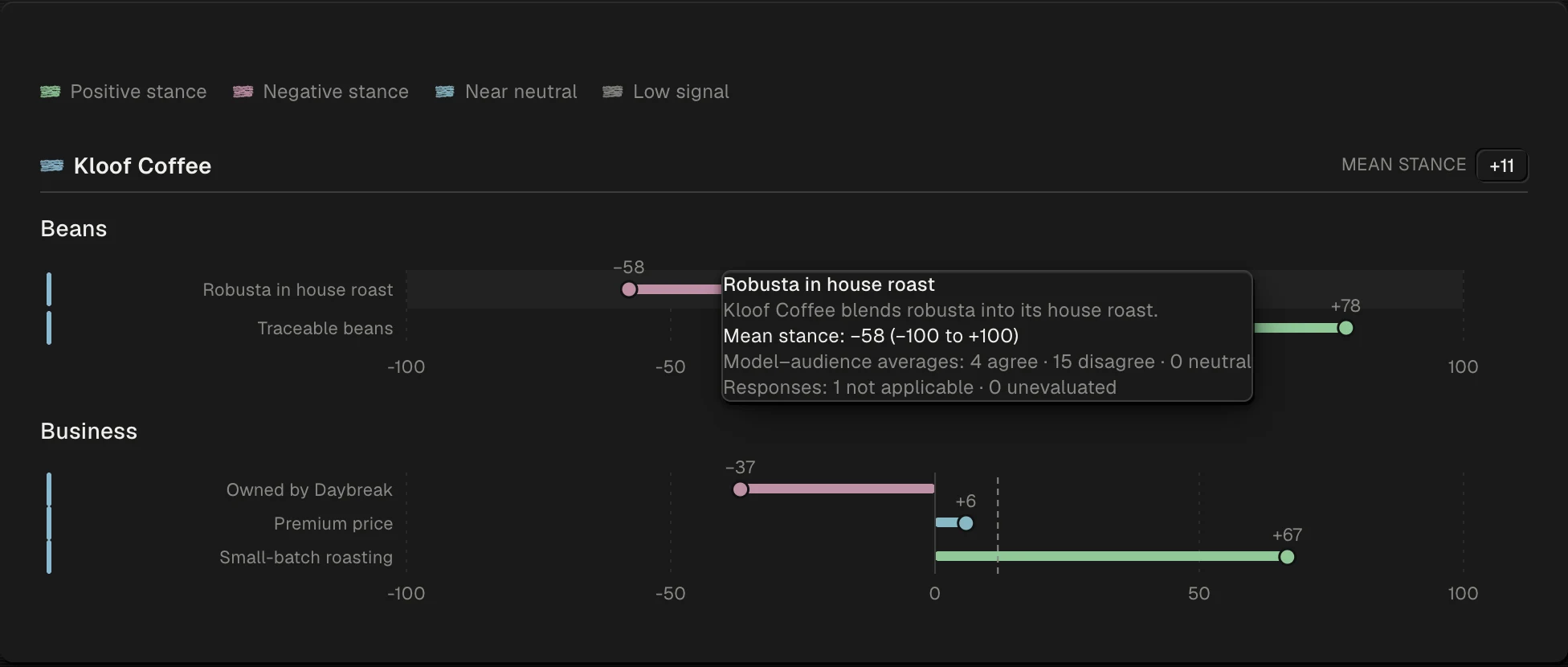
Add the disputed claim to Narrative Tracking as a statement, with the correct answer and the source that settles it. llmeknow then asks the questions people really ask across several models, several times each, and scores every answer for how far it agrees with each statement you track.
The Narrative Tracking page shows the result per statement, model and audience, wave by wave, so you can see whether the models are moving from repeating the claim to rejecting it. Each answer keeps its verdict, the passage it rests on and the sources it cited.
| Endorsed | The answer states the claim as fact. |
|---|---|
| Attributed | The answer reports the claim as someone else’s, without taking a side. |
| Rejected | The answer says the claim is wrong. |
| Not raised | The answer does not mention the claim. |
Separately, each answer is marked as aligned with your reference, partly aligned, or contradicting it.
Who is asking
Different stakeholders hear different stories
A reporter, a graduate looking for work and a shareholder ask about the same organisation in different words, and AI answers each of them differently. llmeknow asks every question for each stakeholder group you define, plus a baseline with no audience, so you can see which group is hearing the outdated version.
Sources
See which pages the story comes from
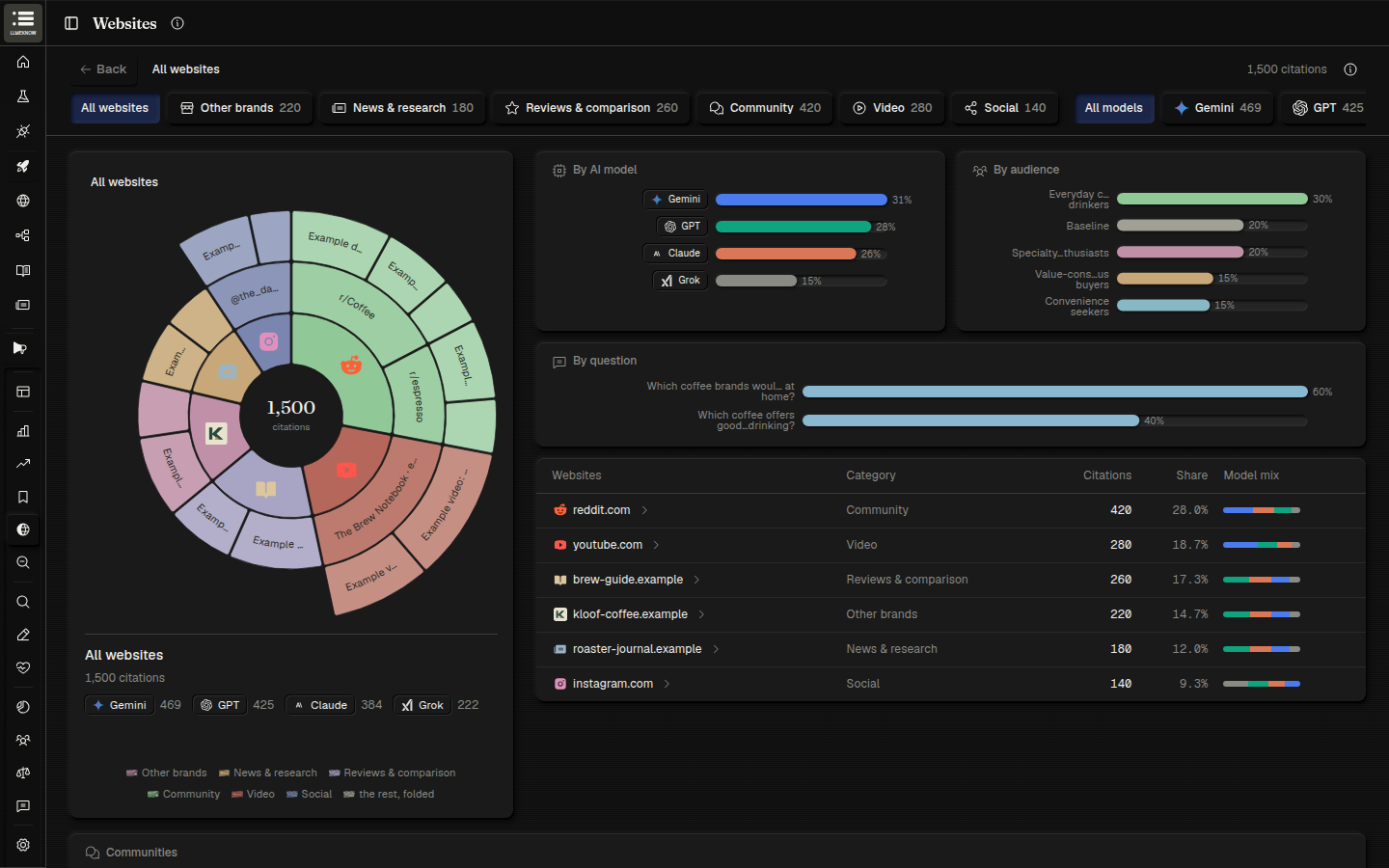
Alongside each answer, llmeknow records the web pages the model cited. That shows where a wrong claim lives: a stale profile, an old news report, a directory nobody updates. Those pages are where a correction does the most good.
The output
What each wave gives you
A wave is one full run of your questions across every model and stakeholder group. Each one gives you:
- How strongly each answer makes each statement, per model and stakeholder group.
- The answers that contradict your reference, with the passage to review.
- The tone of every mention of your organisation and its people.
- The sources the models cited, so you know where to send a correction.
- Every answer kept, so any finding traces back to the text that produced it.
Honesty note
What this cannot do
Nobody can edit what a model says. Answers change when the information models read changes, and when providers update their models. llmeknow shows what AI says today, where it gets it, and whether your corrections are taking hold from one wave to the next.