How to track brand presence in AI search results and LLM outputs
The short version: ask the major AI models the questions your buyers ask, extract every brand mention from the answers, measure share of voice and how each brand is described, and repeat the exercise on a schedule so you can see movement. This guide walks through each step, and explains why the audience asking the question changes the answer you get.
Updated 17 July 2026
Step 01
Define the questions your buyers actually ask
Start from purchase intent, not from your brand name. Most buyers do not ask "tell me about Brand X"; they ask "what is the best bank for a small business in South Africa?" or "which car insurance is cheapest for a young driver?". Your brand either shows up in those answers or it does not.
Write ten to thirty questions covering the whole journey: open category questions, comparison questions, problem-led questions, and a few direct brand questions as a control. Keep the wording natural. If a question sounds like a marketer wrote it, a buyer never asks it.
Step 02
Decide which audiences are asking
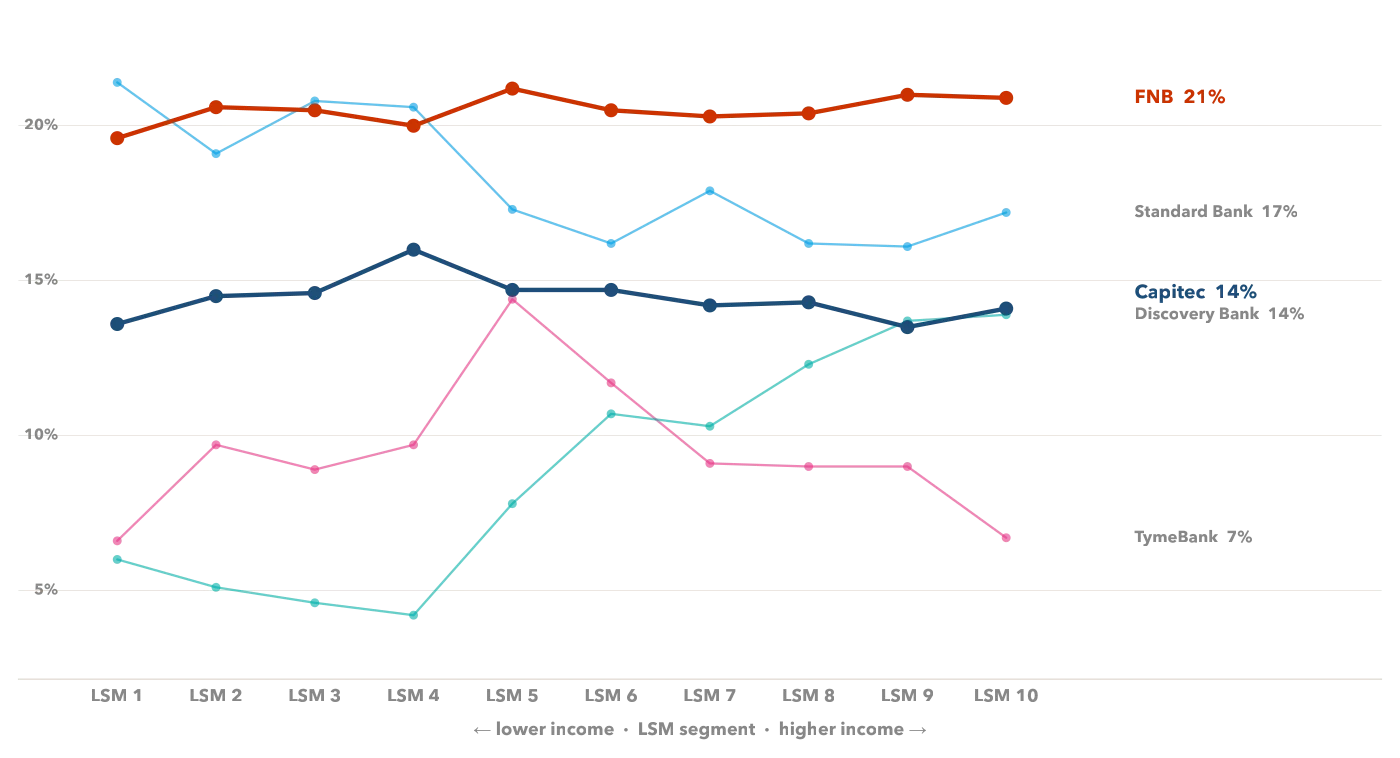
This is the step most tracking skips, and it is the one that changes the results most. AI models tailor answers to the person asking: the same insurance question from a student and from a retiree produces different recommendations, different reasoning, and different sources.
Define the audience segments that matter to your business (life stage, income band, region, role) and put each question in the context of each segment. Also run every question with no audience context at all. That baseline is your reference point: the difference between the baseline answer and each segment answer is where the insight lives.
Step 03
Choose the models to monitor
Your buyers are spread across ChatGPT, Gemini, Claude, Grok, Perplexity, DeepSeek, and whatever ships next quarter. Each has different training data, different web search behaviour, and different opinions. A brand can dominate on one model and be invisible on another.
Monitor at least the three or four models with the largest share of your market’s usage, and query them live rather than relying on cached or synthetic answers. Where models cite web sources, capture those too: the sources explain why a model says what it says.
Step 04
Run every question through every model and segment
Now run the full grid: every question, for every segment plus the baseline, on every model. One complete run of that grid is a wave, and it produces a matrix of real AI responses. For a modest setup (twenty questions, five segments, five models) that is already six hundred responses per wave, which is why doing this by hand in a chat window does not scale past the first afternoon.
Keep the raw responses. Summaries are useful, but when a stakeholder asks "what did it actually say?", you want the full text with the mentions highlighted.
Step 05
Extract mentions, then measure
From each response, extract every entity you care about: your brand, competitors, and any category-specific attributes (fees, reliability, service quality, whatever your research needs). Group variant spellings and abbreviations into a single clean entity so "FNB" and "First National Bank" count as one brand.
The core metrics to compute from those mentions:
- Share of voice: the percentage of responses that mention each brand, by model and by segment.
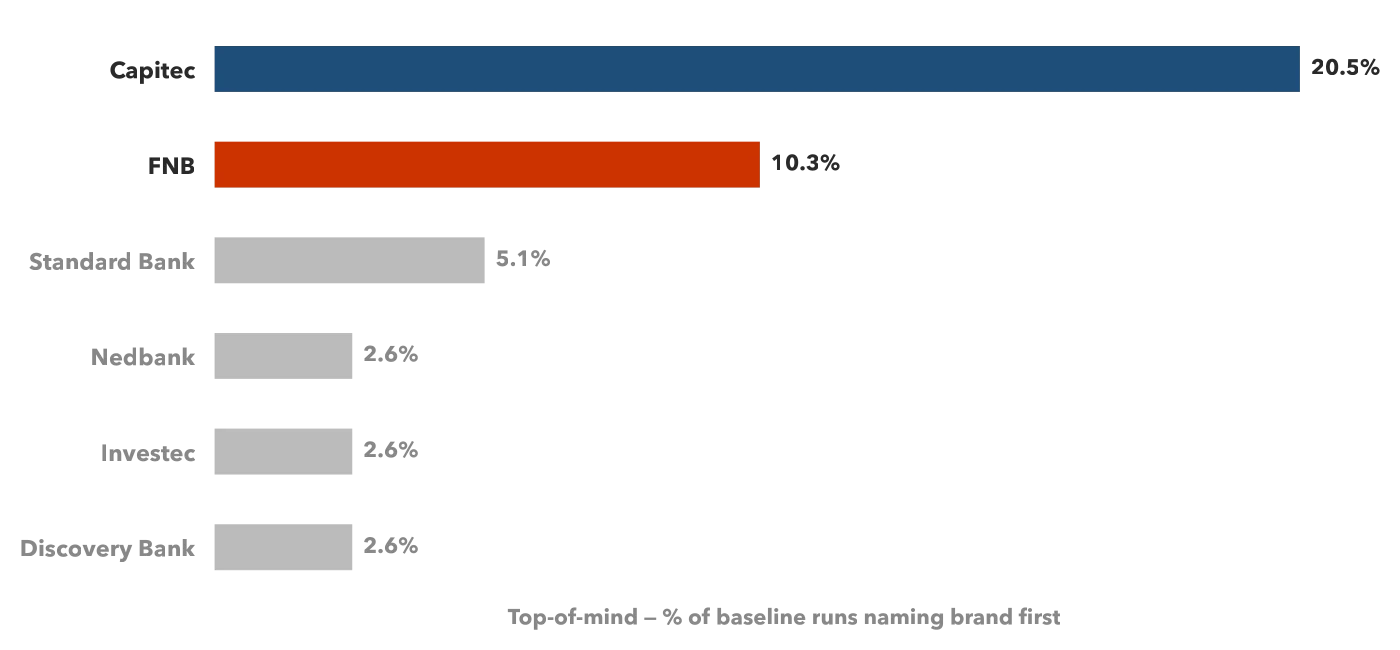
- Top-of-mind recall: which brand the model names first when the question is open-ended.
- Characterisation: which attributes recur next to each brand (affordable, premium, slow, trusted).
- Sources: which websites the models cite when they answer, and which of them mention you.
Step 06
Repeat on a schedule and compare waves
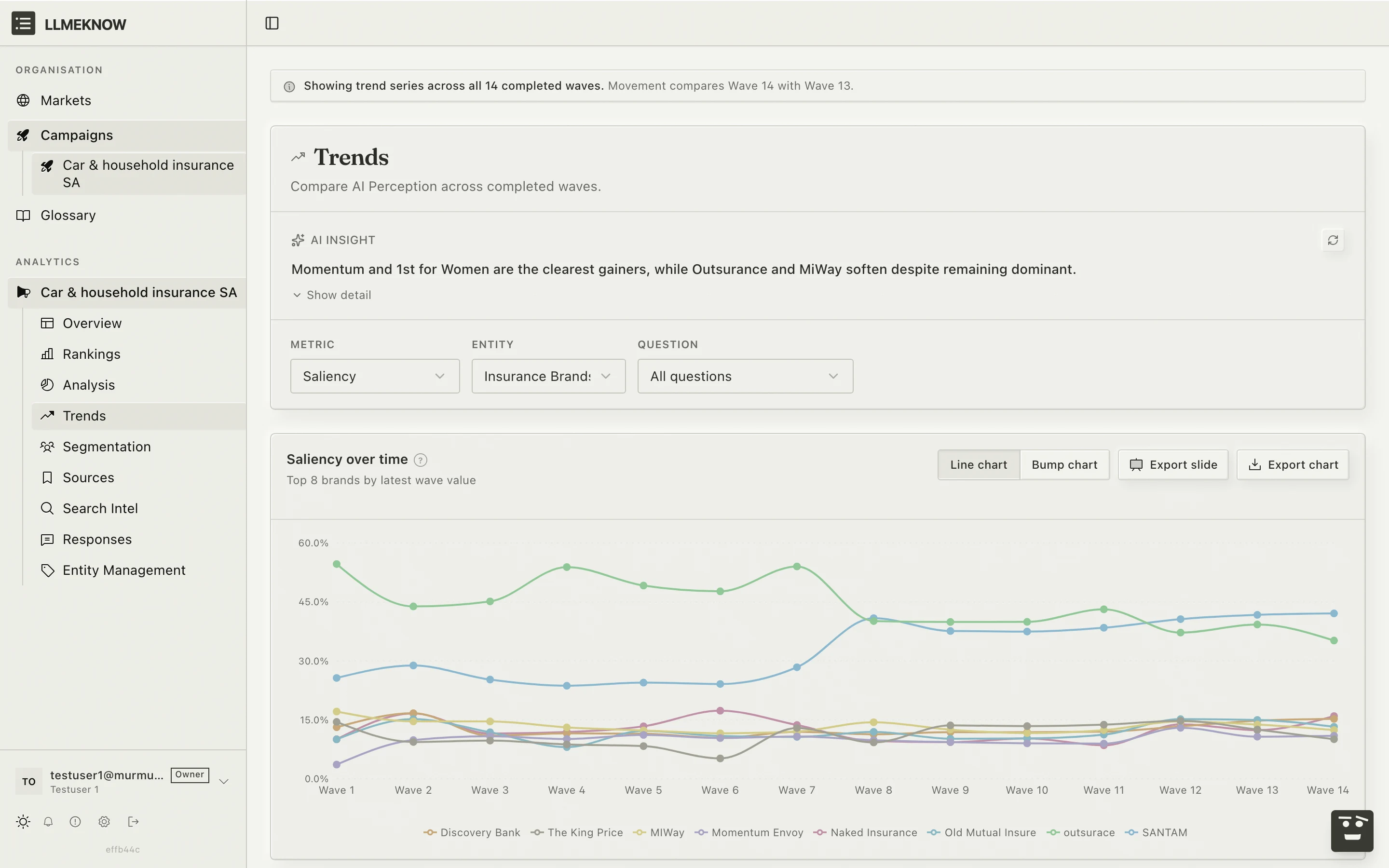
A single measurement is a snapshot; the value compounds when you repeat it. Run the same grid on a schedule (monthly is common) and compare waves: which brands gained share of voice, which segments shifted, whether a campaign or a PR event moved the answers.
Keep the questions stable between waves. If you change the questions every wave, you are measuring your questionnaire, not the market.
Step 07
Act on what you find, then measure again
Measurement is a loop, not a destination. The sources and search queries captured in each wave tell you where the models get their story about your category: which pages they cite, what they searched for, and where they came up empty.
That map is your work list. If AI repeats stale claims, the pages feeding it need updating. If it misses you on questions you should win, the information it needs is not where it looks. The honest lever is better information in the places models read, not tricks: clearer product pages, current factual content, coverage that answers the questions your buyers actually ask. Ship the improvements, hold the questionnaire stable, and the next wave tells you whether the answers moved.
In practice
Doing this with llmeknow
Everything above can be done manually, and for a one-off spot check that is a fine way to start. llmeknow exists for the version that scales: it generates audience segments and personas from a market description, runs every question through every major model in each persona’s context, extracts and deduplicates entity mentions automatically, and tracks share of voice, characterisation, and cited sources across waves.
The output is the same measurement described in this guide, produced in hours instead of weeks, with the raw responses kept for inspection.
Common questions
Related reading
Understanding AI influence
How GEO, AEO, SEO, and LLM monitoring fit together as one discipline.
How llmeknow measures AI perception
The measurement methodology behind this process, including its honest limits.
GEO vs AEO vs LLM monitoring
What the competing terms mean, and which kind of tool you need.
Monitor brand mentions in AI chatbots
How llmeknow tracks what the major AI systems say about your brand.
Brand name monitoring and entity recognition
How mentions are identified and variant names are grouped into clean entities.
Run the whole process in one campaign.
Explore the platform for 30 days with no subscription fee and no card. You pay only for the AI responses you generate, with the estimated cost shown before anything runs. No subscription starts unless you choose one.