Understanding AI Influence
AI has a different answer for everyone.
llmeknow is the platform for understanding AI influence on your brand: it measures what ChatGPT, Claude, Gemini, Grok, Kimi, and other AI models say about a brand or subject, and how those answers shift by audience segment.
What your market asks AI
The shift
Your buyers stopped searching. They started asking.
When someone asks an AI assistant which bank to trust or which insurer to avoid, the answer names brands, gives reasons, and attaches warnings. The buyer gets a recommendation and never sees a list of links.
None of it is visible to you. The conversation is private: no search ranking moves, nothing lands in your analytics, and social listening tools pick up nothing.
And AI does not tell everyone the same story. A student and a retiree asking the same question hear different brands, for different reasons.
llmeknow makes those conversations visible. It asks every major model your market’s questions, as your market, and measures what comes back. Then it shows you how to change what comes back: not by gaming the models, but by giving them better information.
How it works
More than monitoring.
Most tools tell you whether a subject appears in AI responses. llmeknow shows you what AI actually says, how that answer changes depending on who is asking, and where to act on it.
Generate
Describe your market. llmeknow builds the audience segments, the questions, and the personas who ask them. Each persona has its own demographics, values, and worldview. Start in one click, configure every detail yourself, or upload your existing segmentation and we'll build the personas around it.
Simulate
Each question is put to every major AI in the context of each persona: ChatGPT, Claude, Gemini, Grok, and more. Every response comes live from the actual model, with no pre-set answers. The same question gets different answers based on who the AI perceives to be asking.
Decode
You define what counts as a subject: brands, competitors, services, pain points, or any entity class your research requires. llmeknow extracts them from every response, groups variant names into consistent deduplicated entries, and shows you share of voice by segment.
Influence
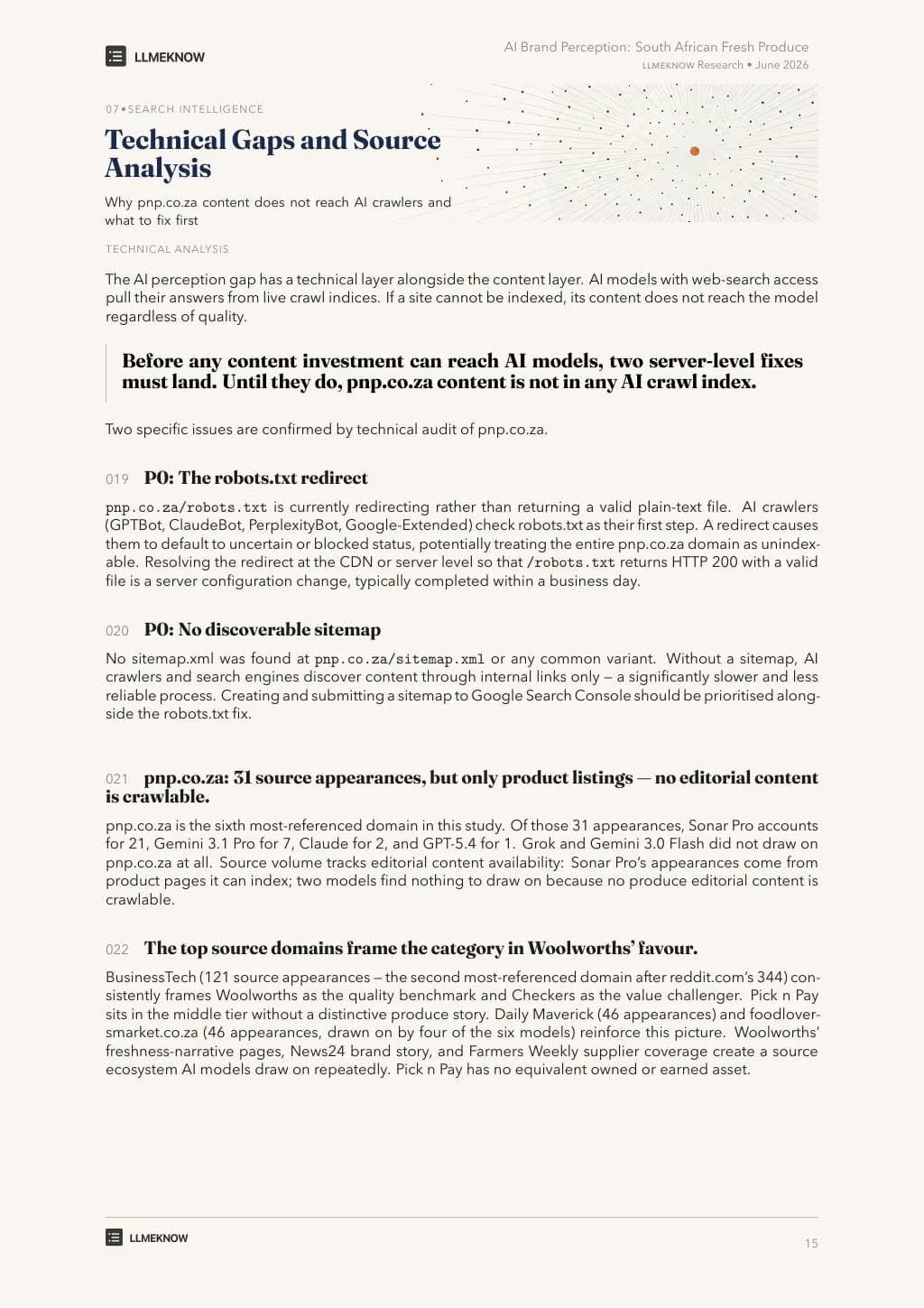
Every answer traces back to the sources feeding it. llmeknow shows which pages, publications, and data the models lean on for your subject, so you know exactly where accurate, current information will change the answer. The way to move an answer is better information, not tricks.
The product
Built for the questions clients actually ask.
A clear picture before any meeting
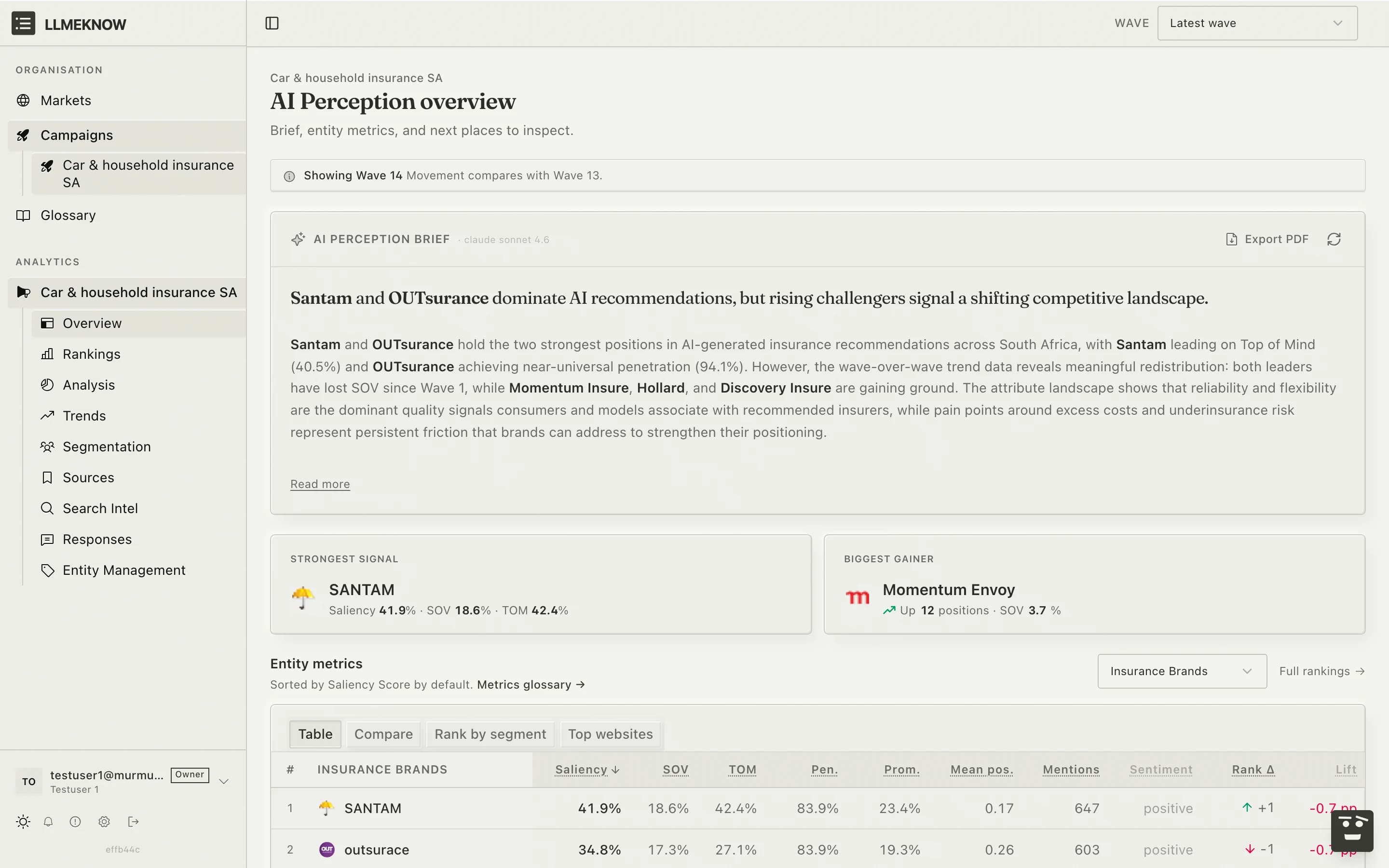
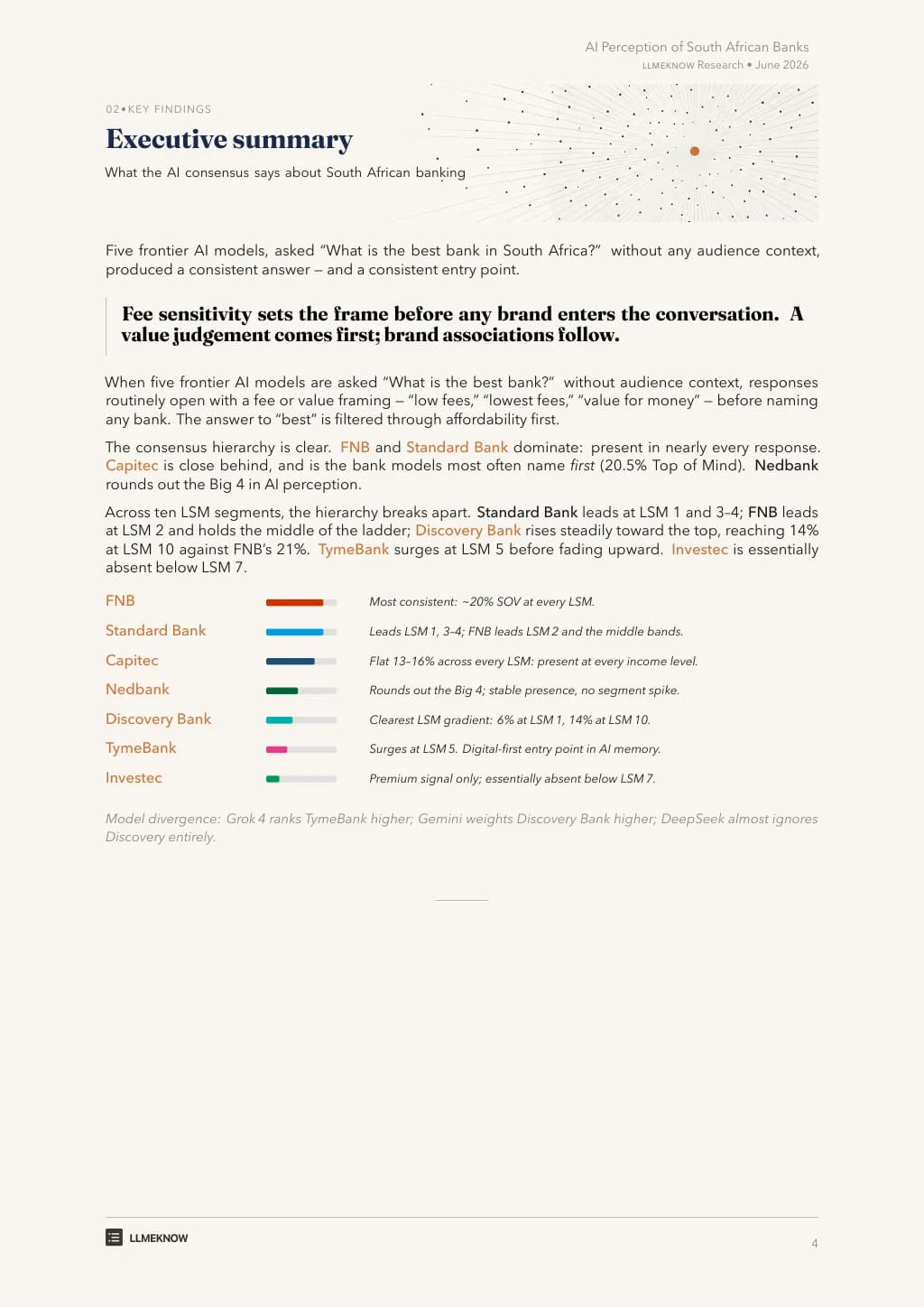
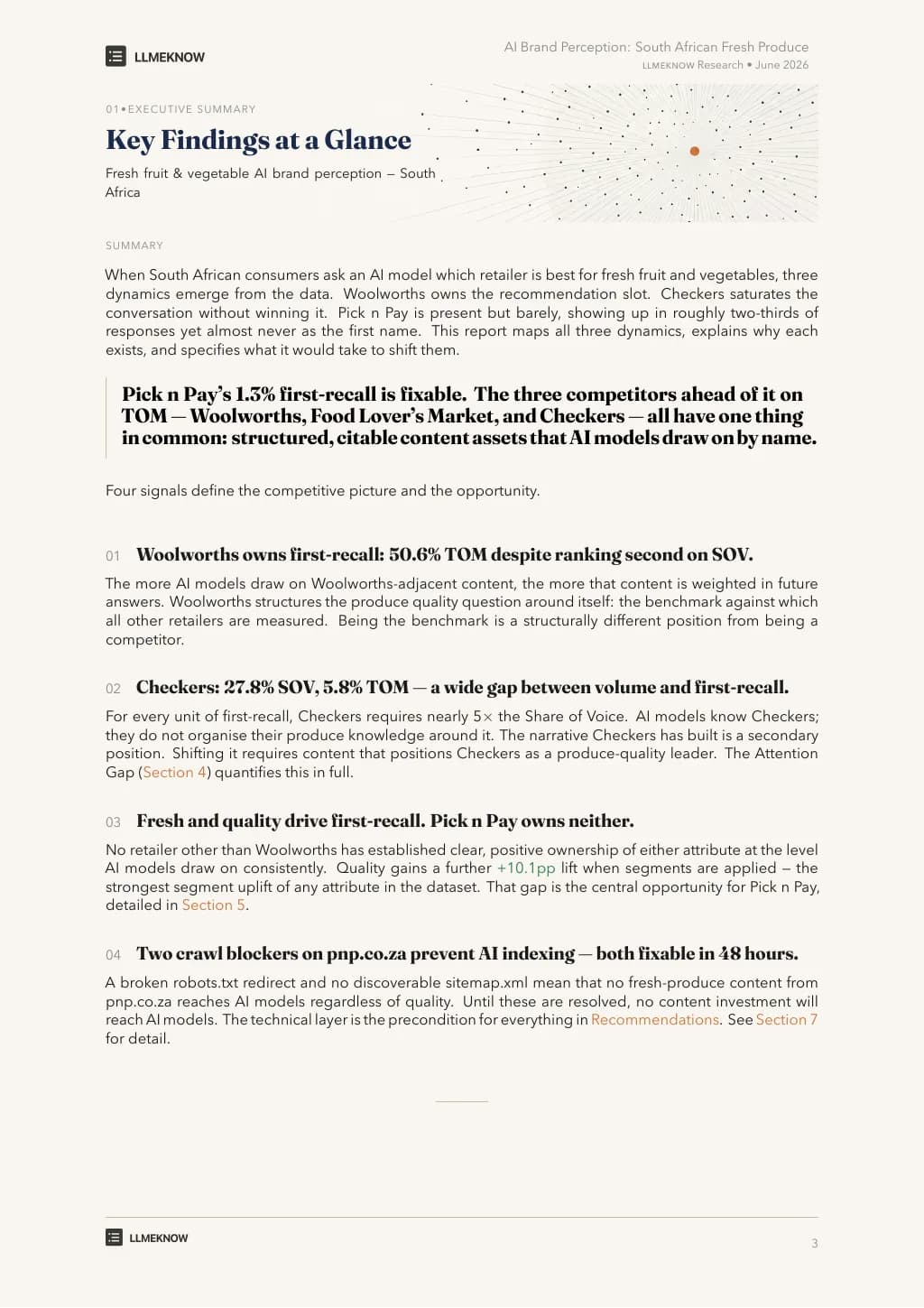
The overview distils an entire study into a plain-English AI perception brief and the numbers behind it: saliency, share of voice, top-of-mind recall, and wave-over-wave movement for every entity you track.
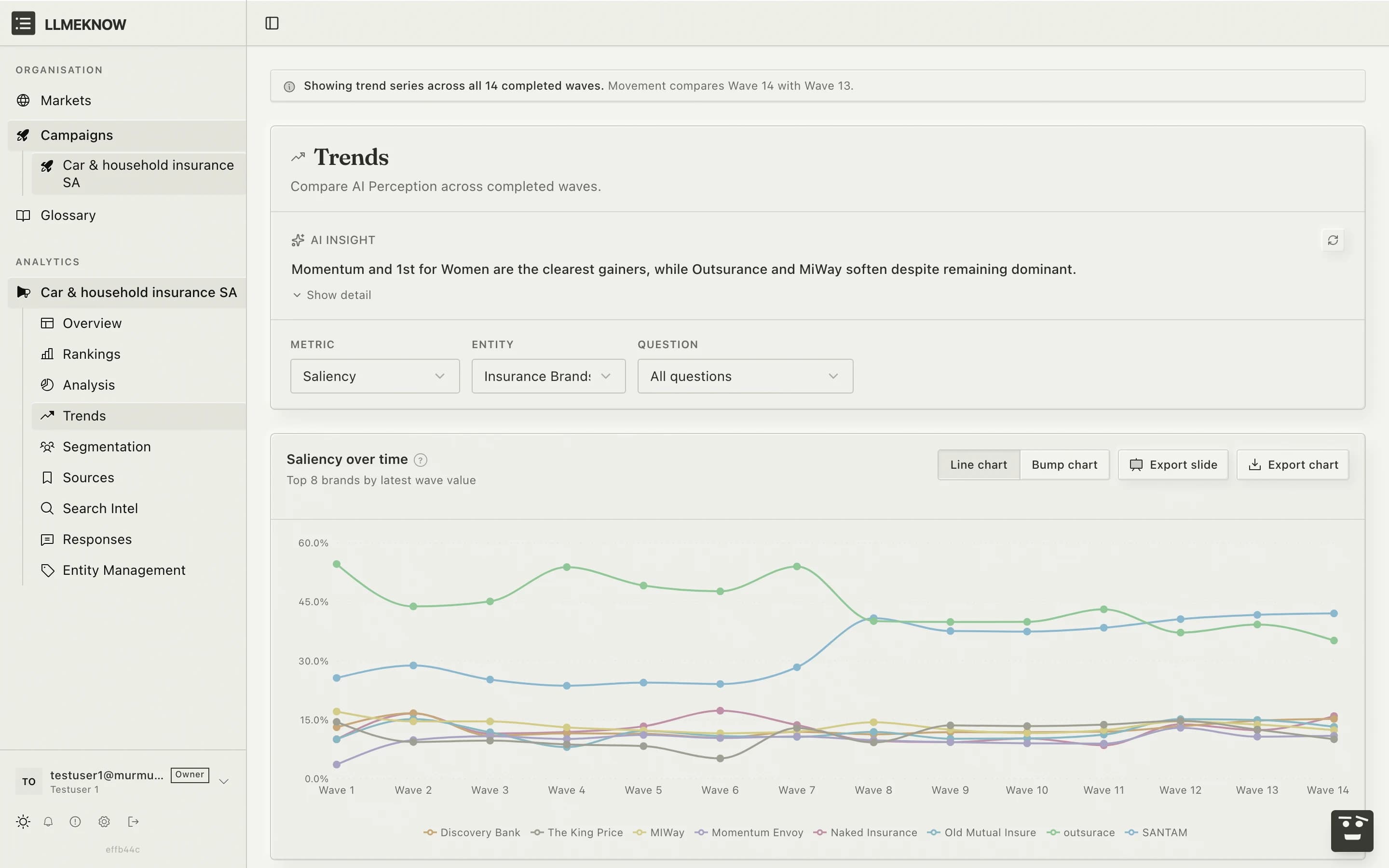
How subject prominence moves across waves
Track how AI coverage shifts over time. Fourteen waves of the same questions show which brands gained, which slipped, and which held, with an AI insight naming the movers.
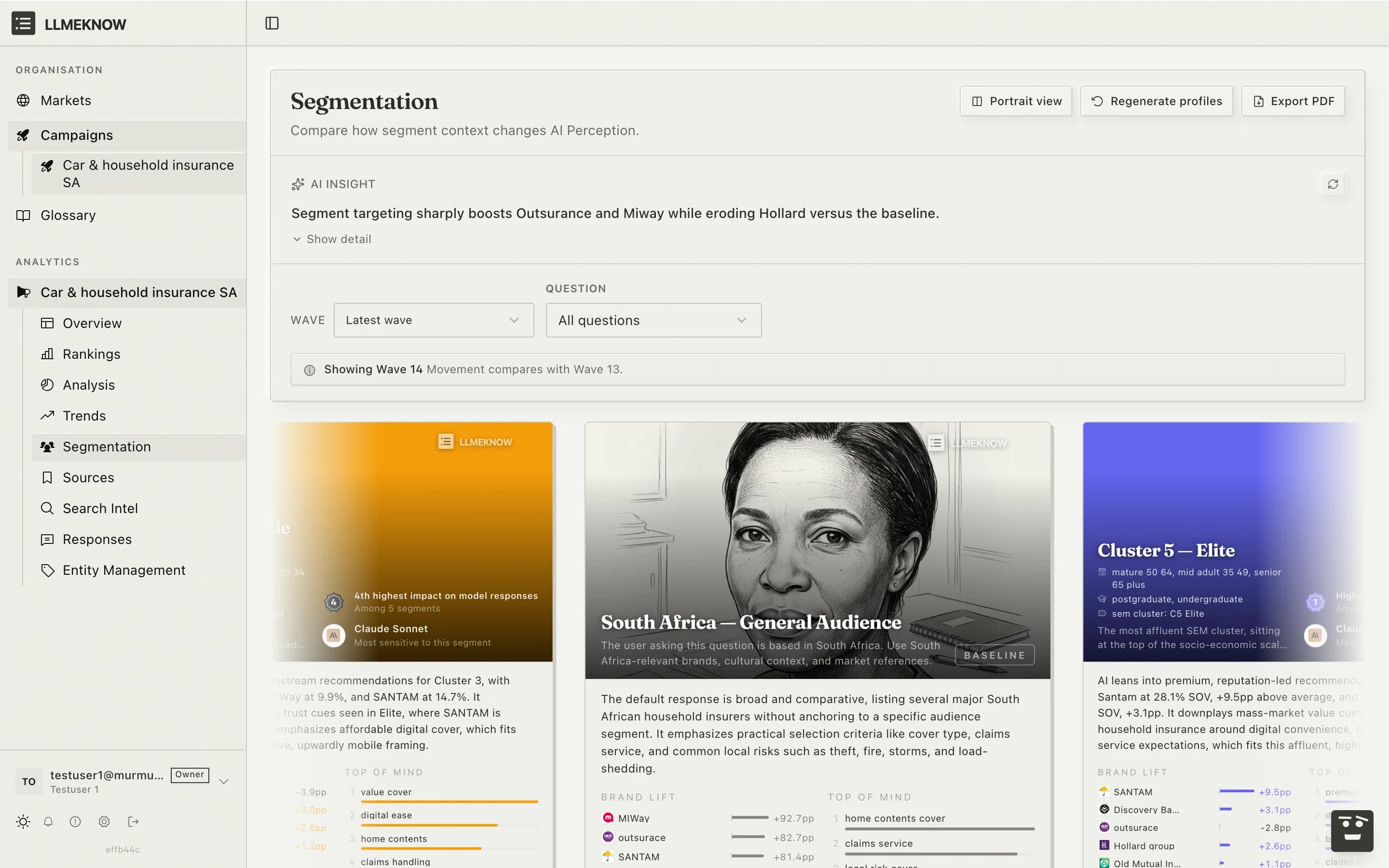
How the same question lands differently by segment
Segmentation profiles each audience: who they are, how AI answers them differently, and which brands gain or lose share against the baseline when the persona shifts.
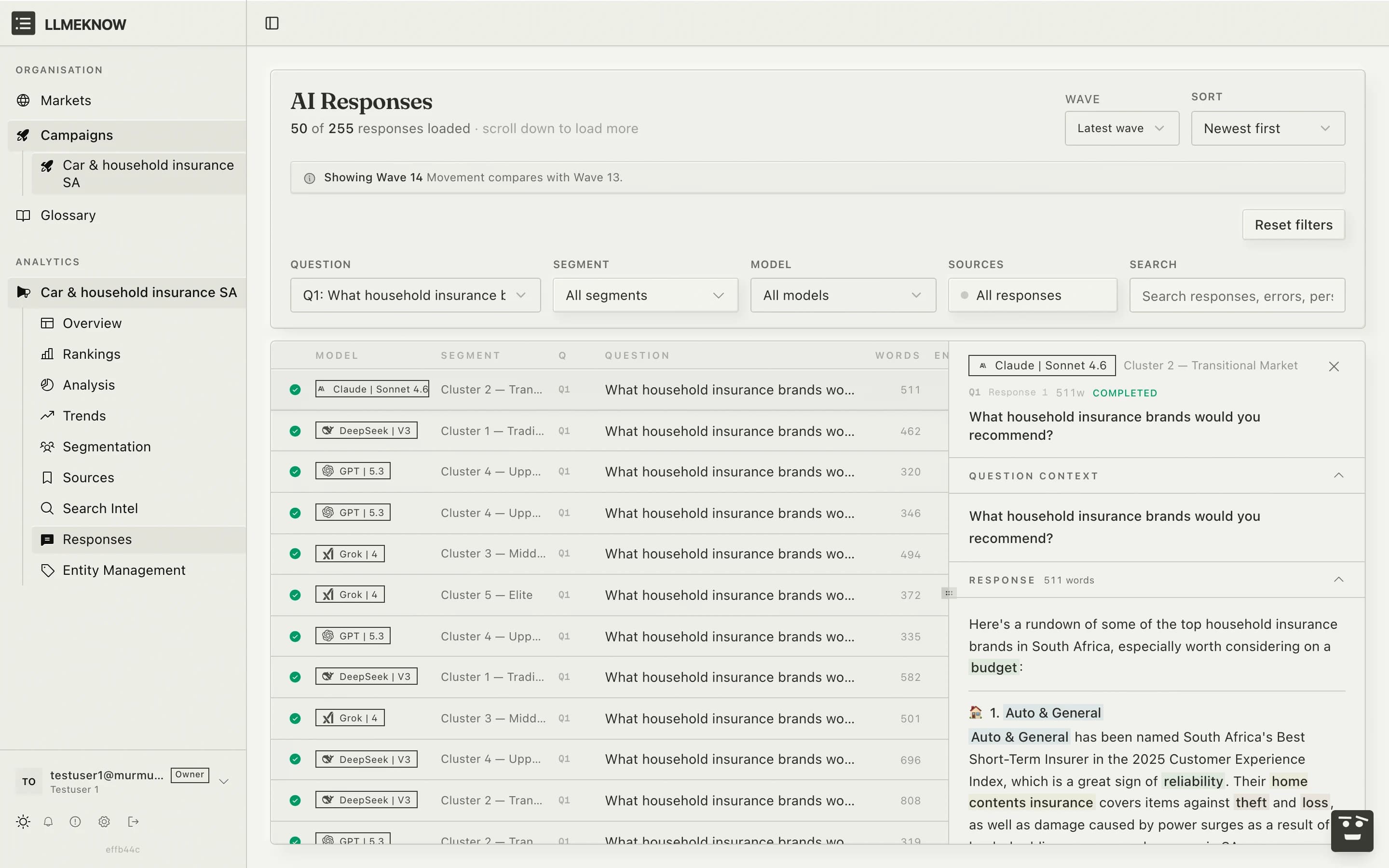
Read the exact responses AI gave each persona
The Response Explorer shows verbatim LLM responses, filtered by question, segment, model, or source. Entity mentions are highlighted inline, drawn from a taxonomy you define rather than a fixed brand list.
The reports your studies produce.
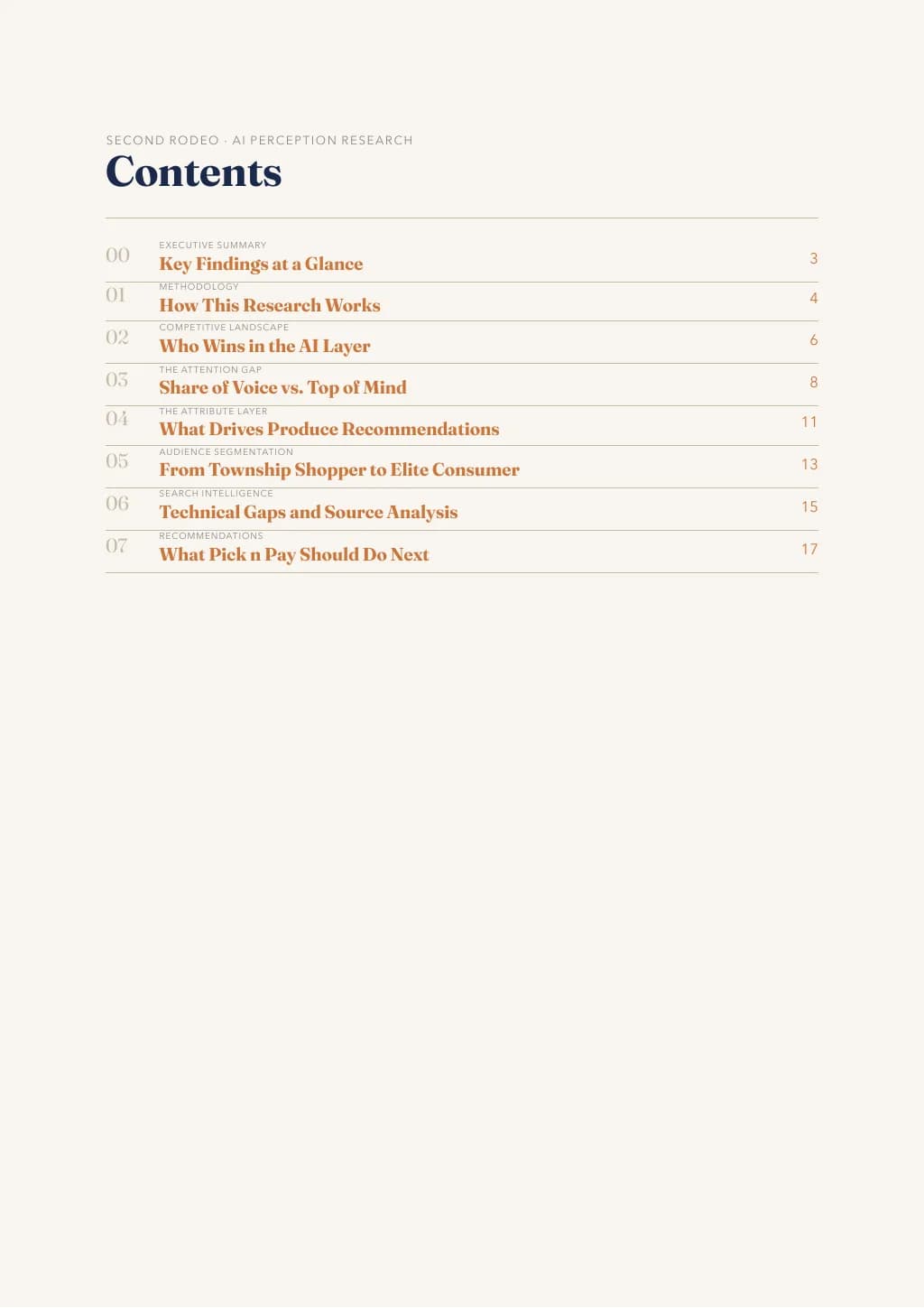
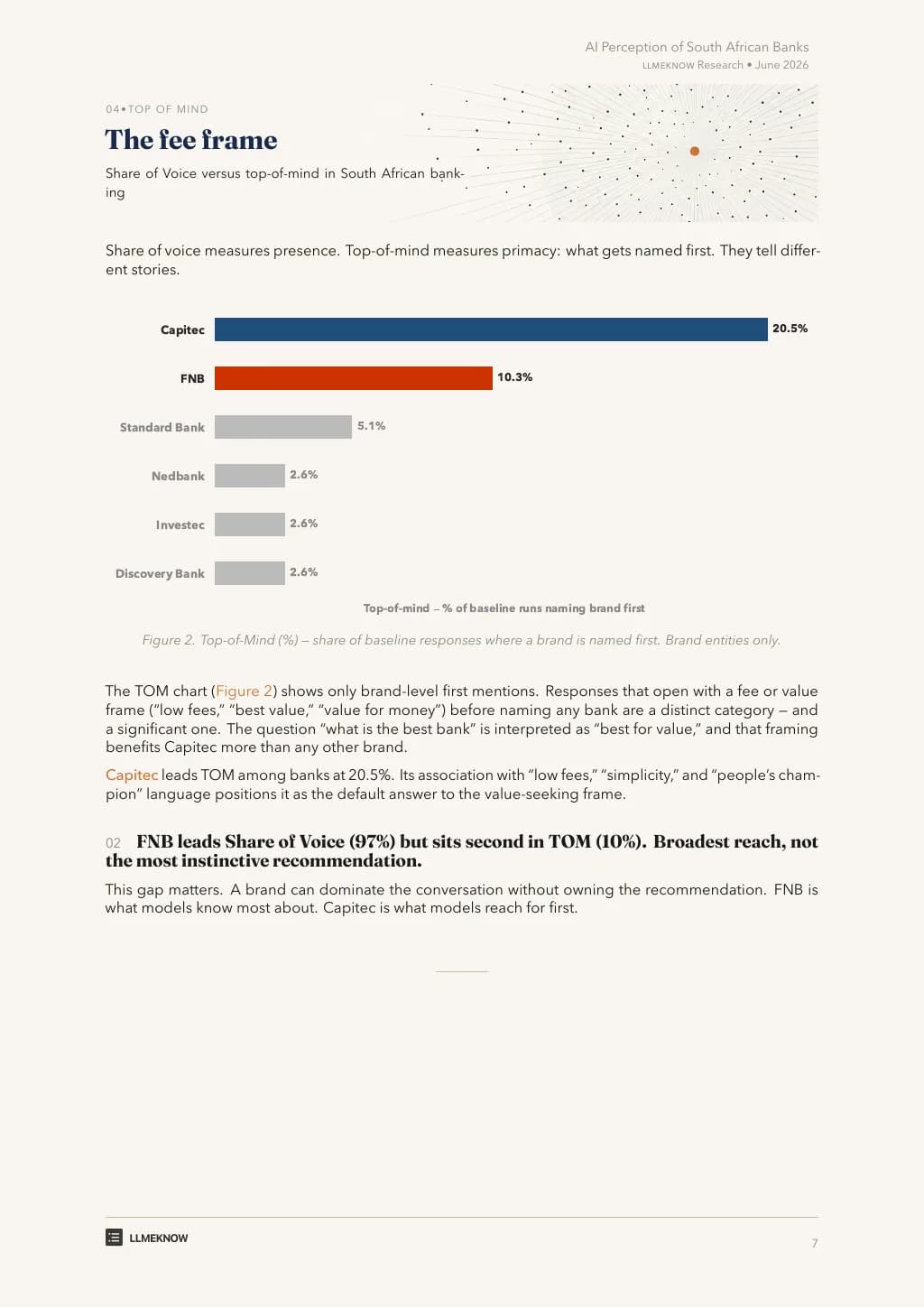
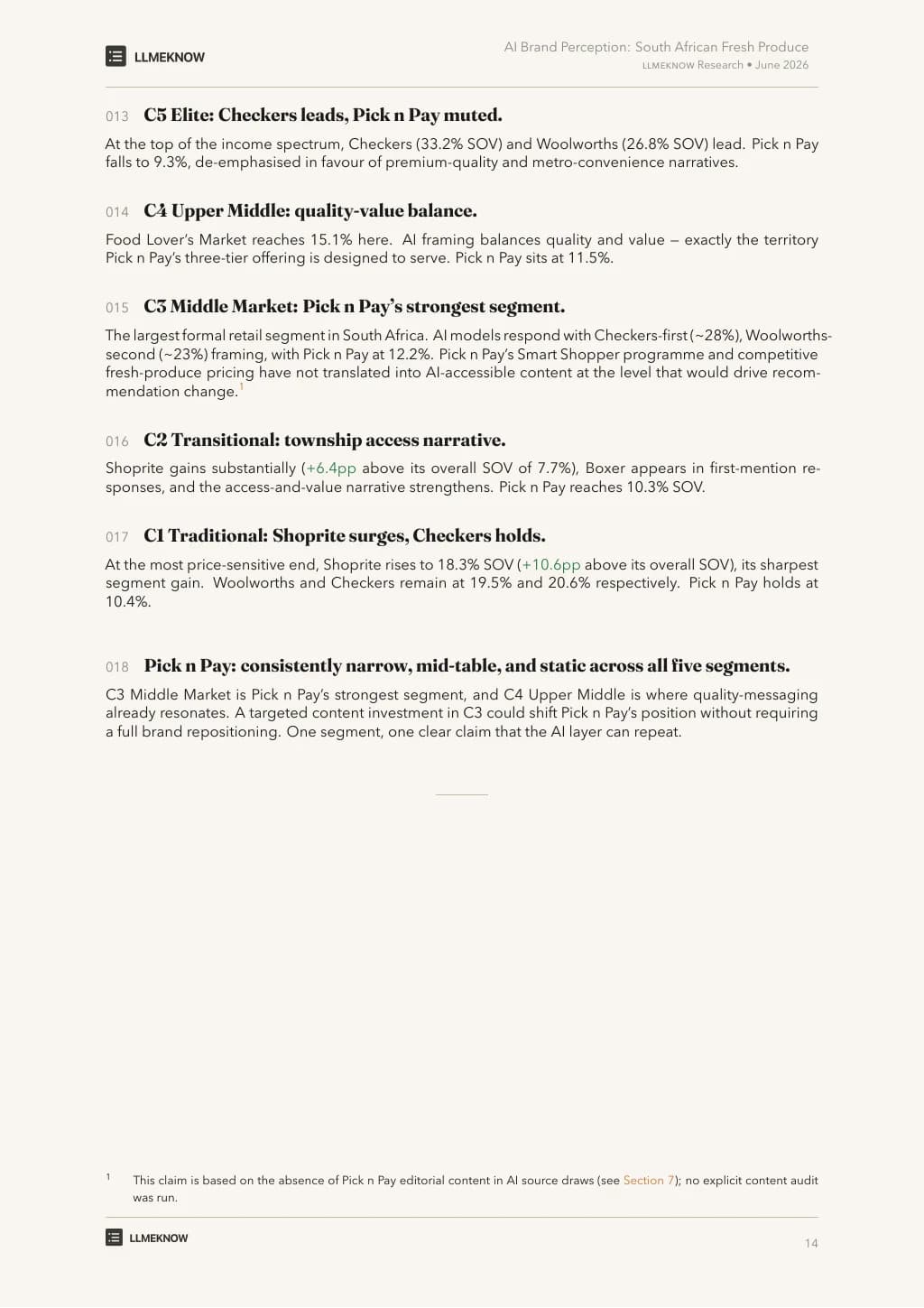
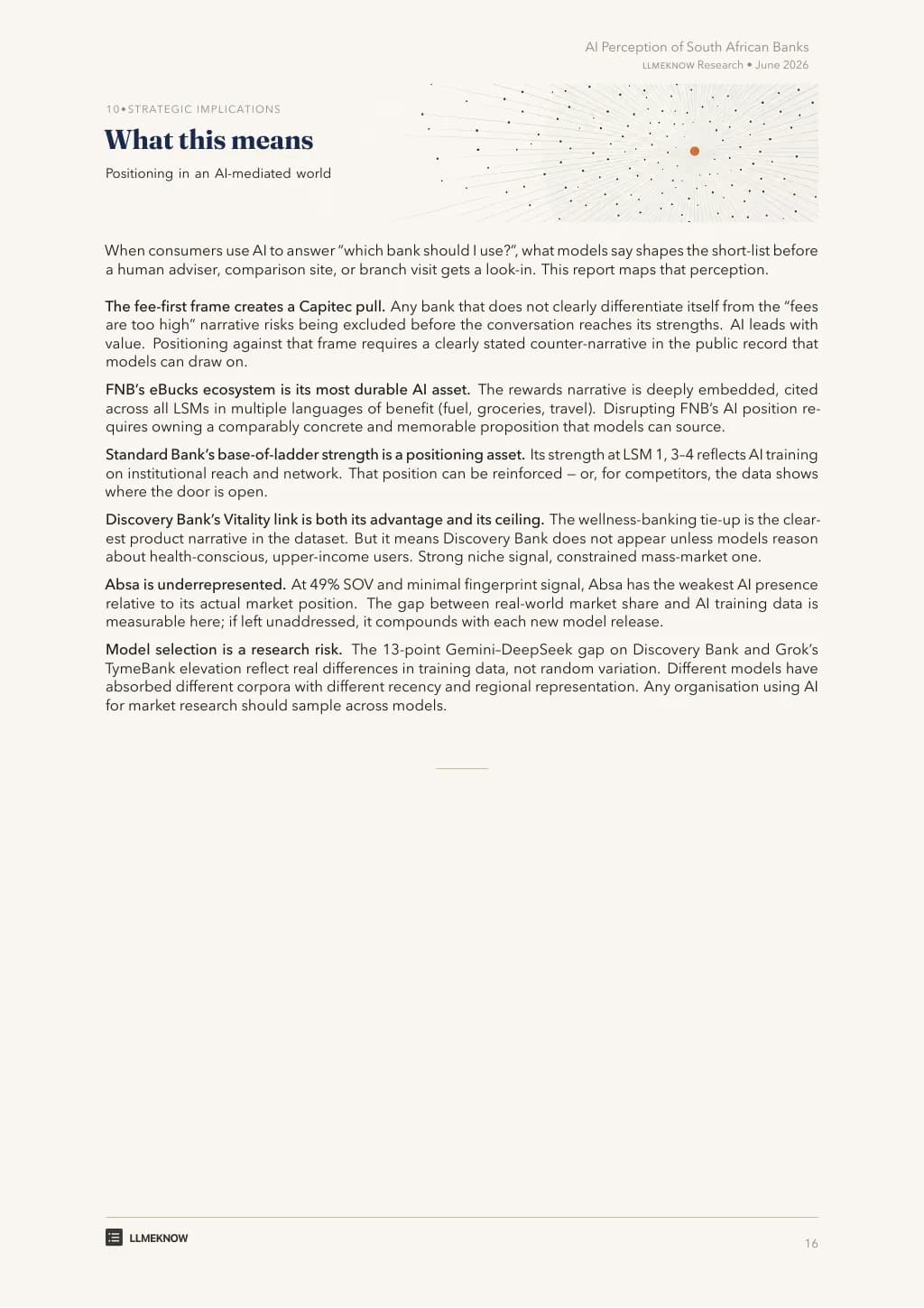
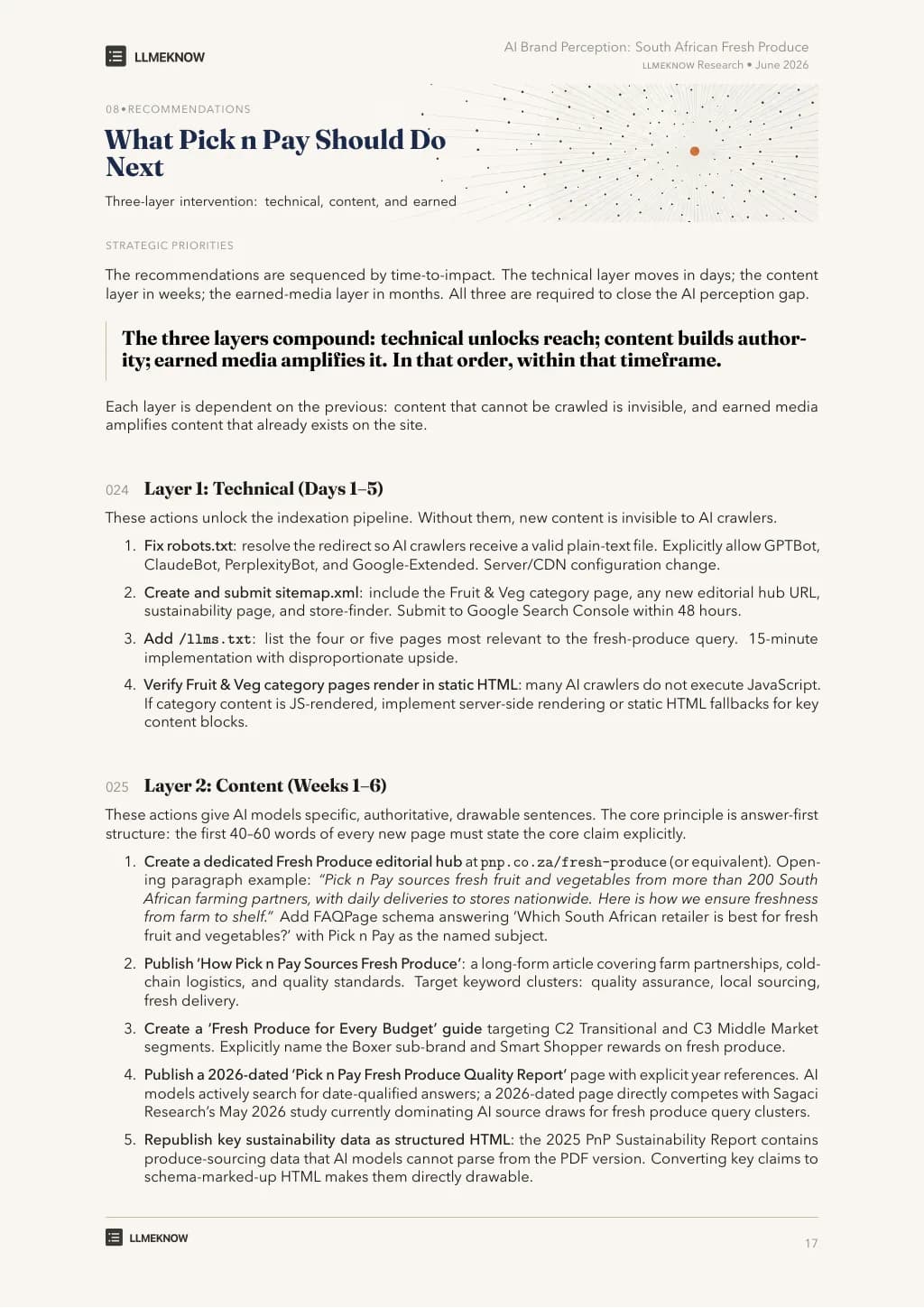
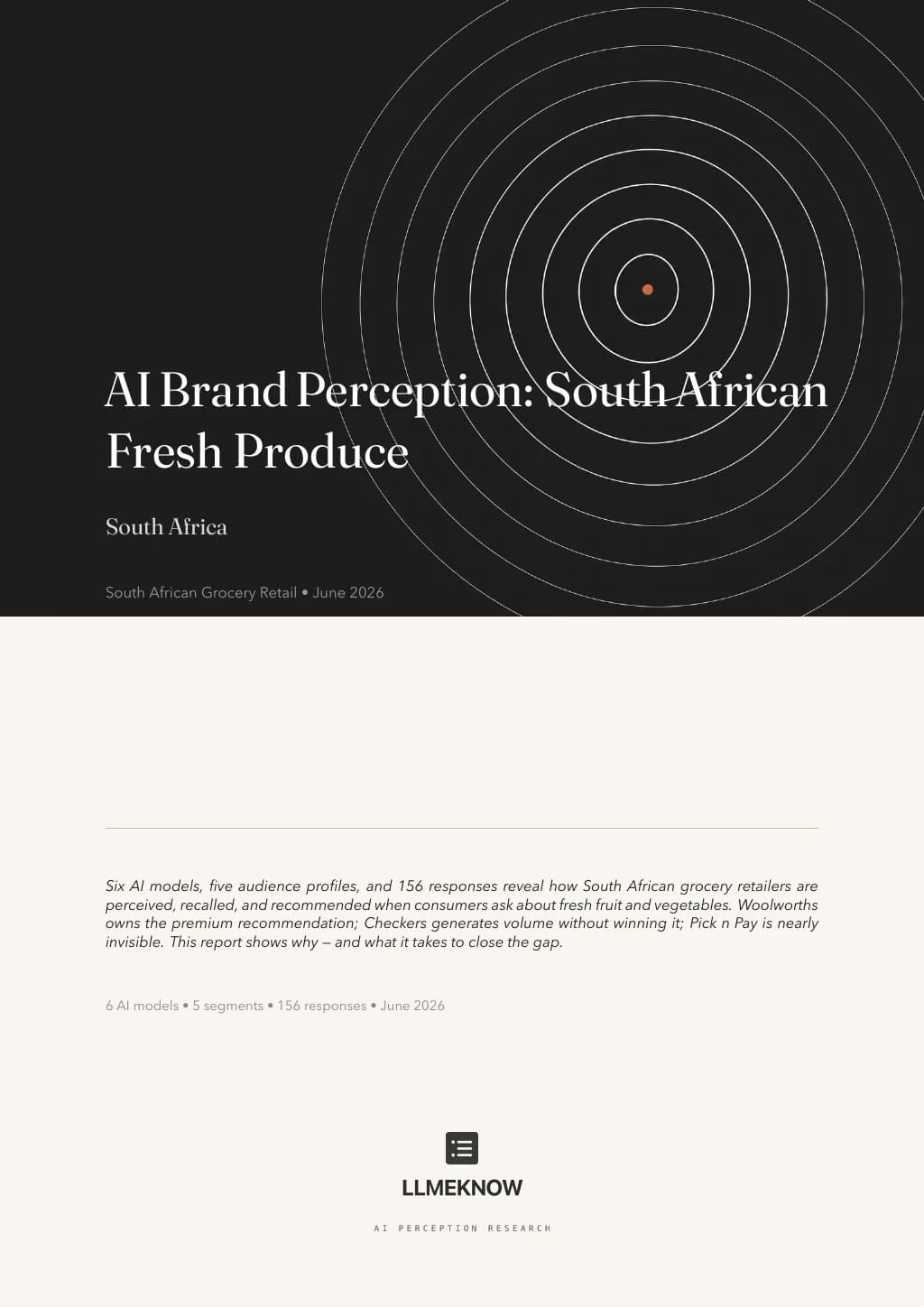
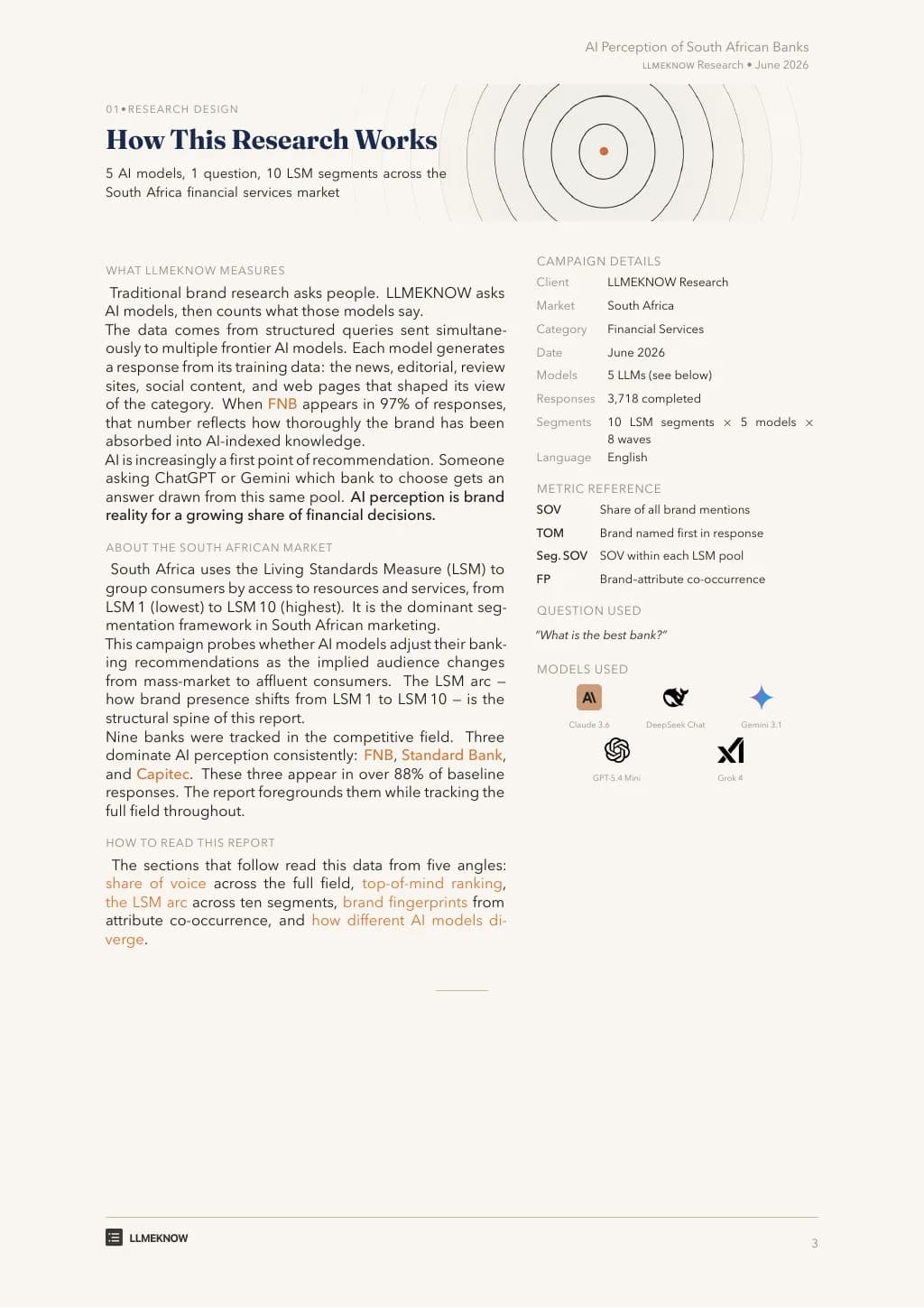
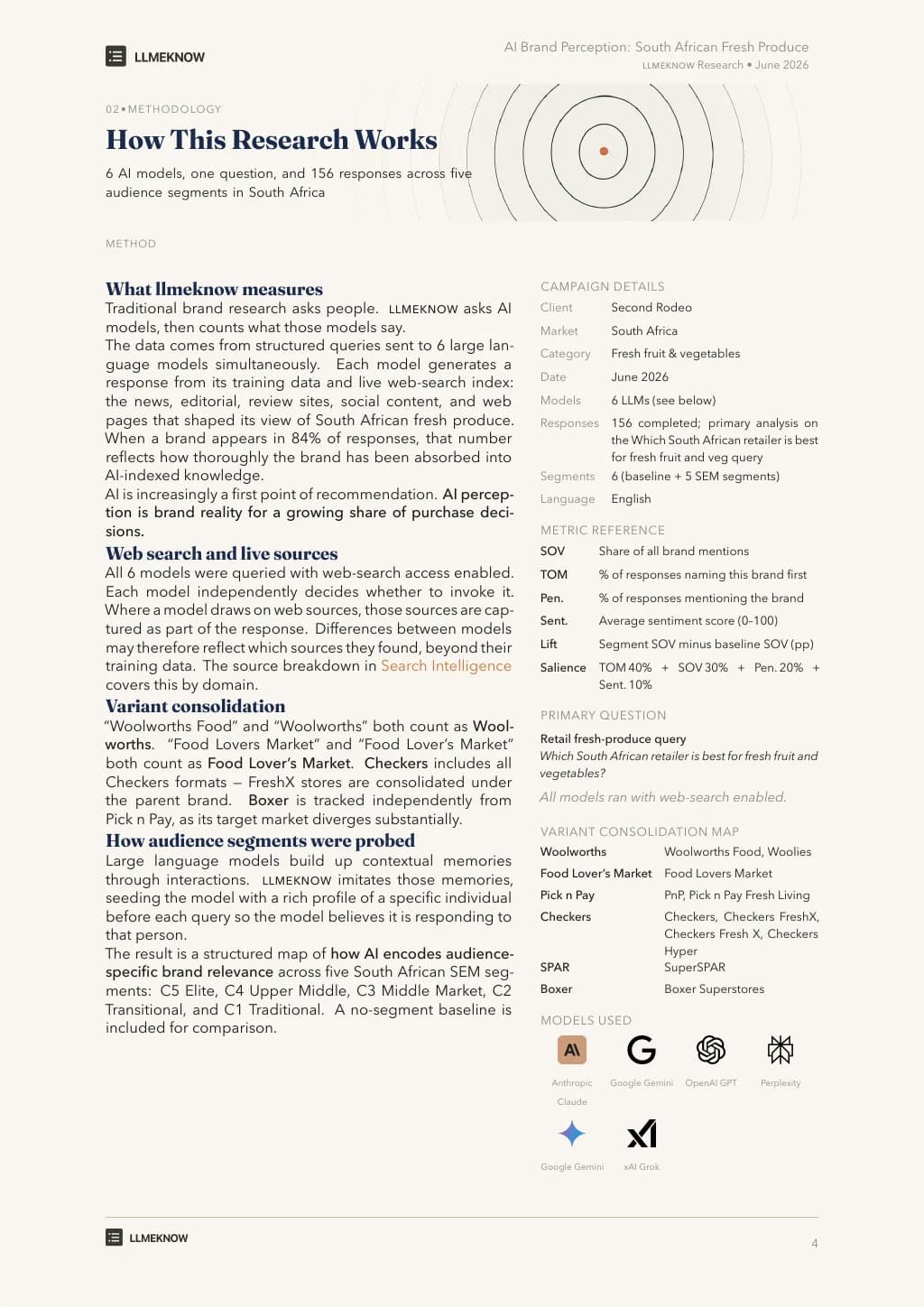
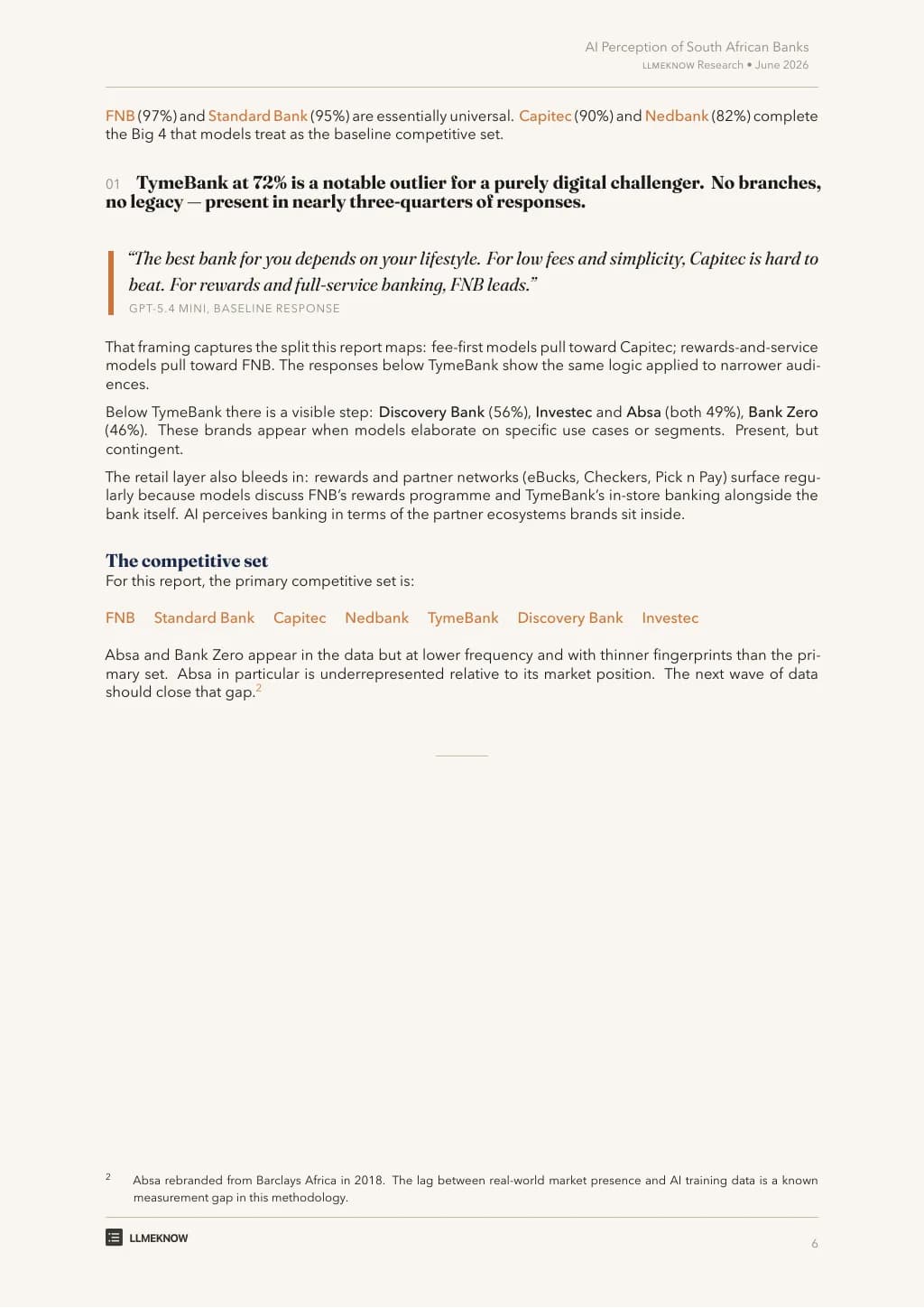
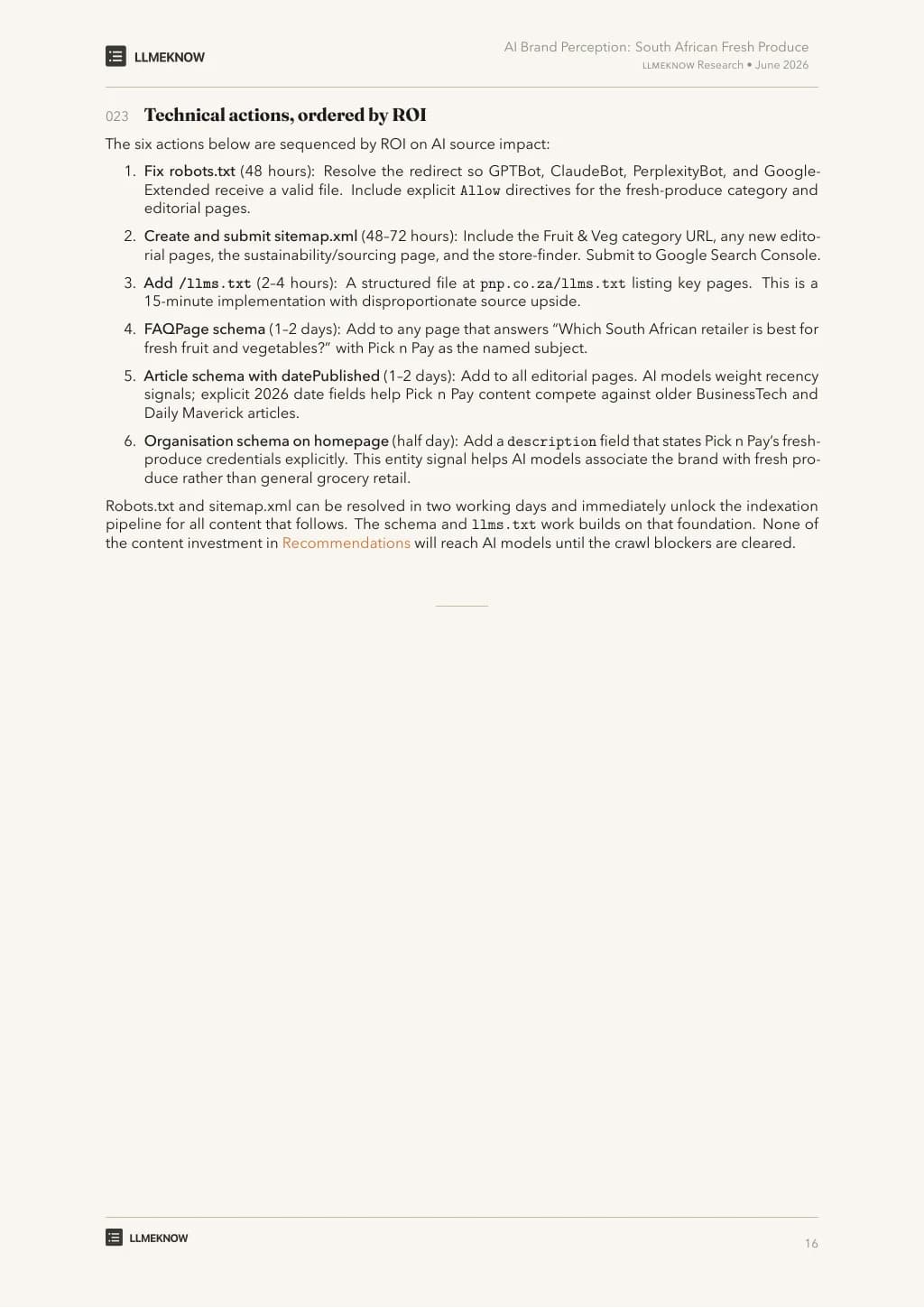
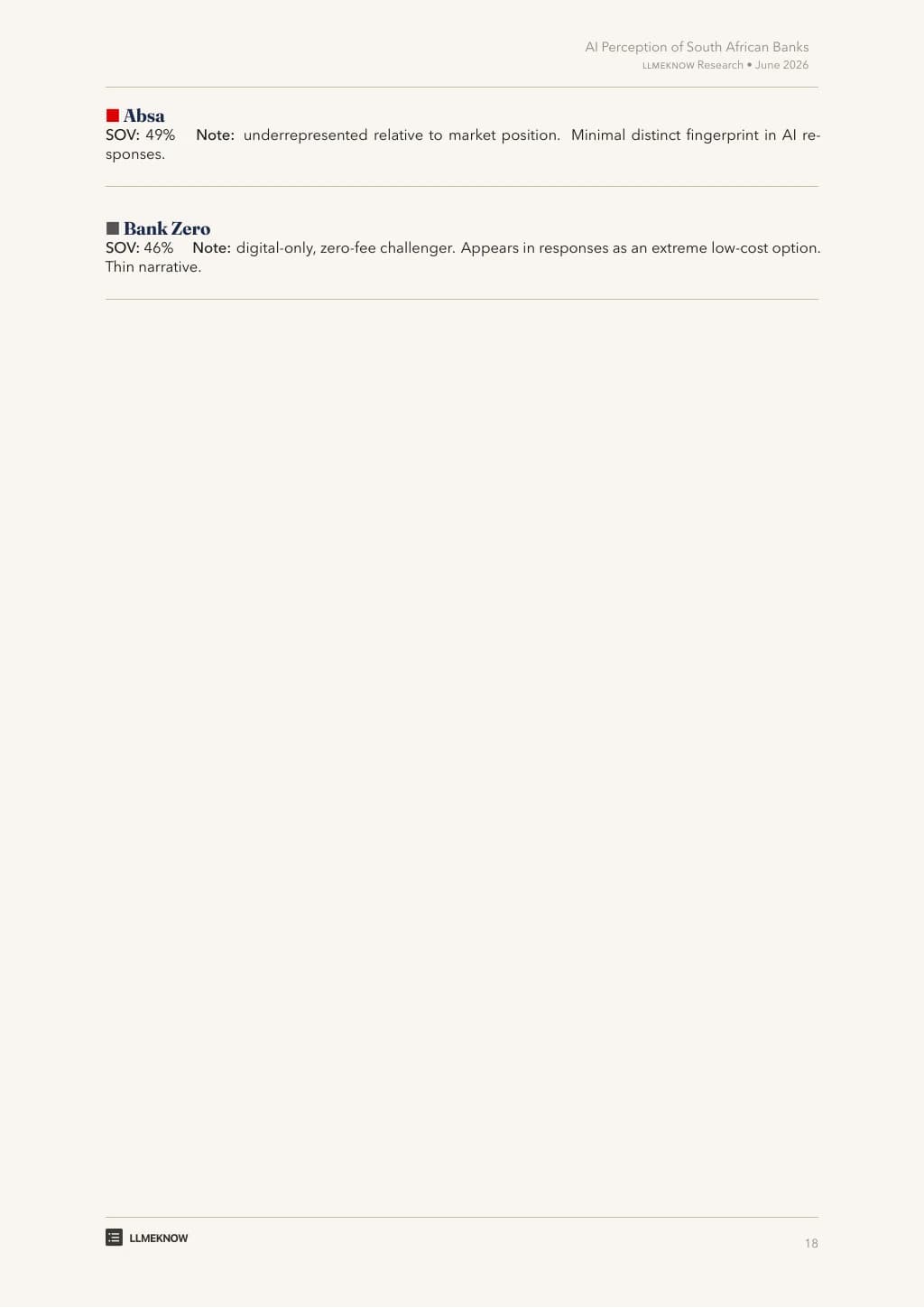
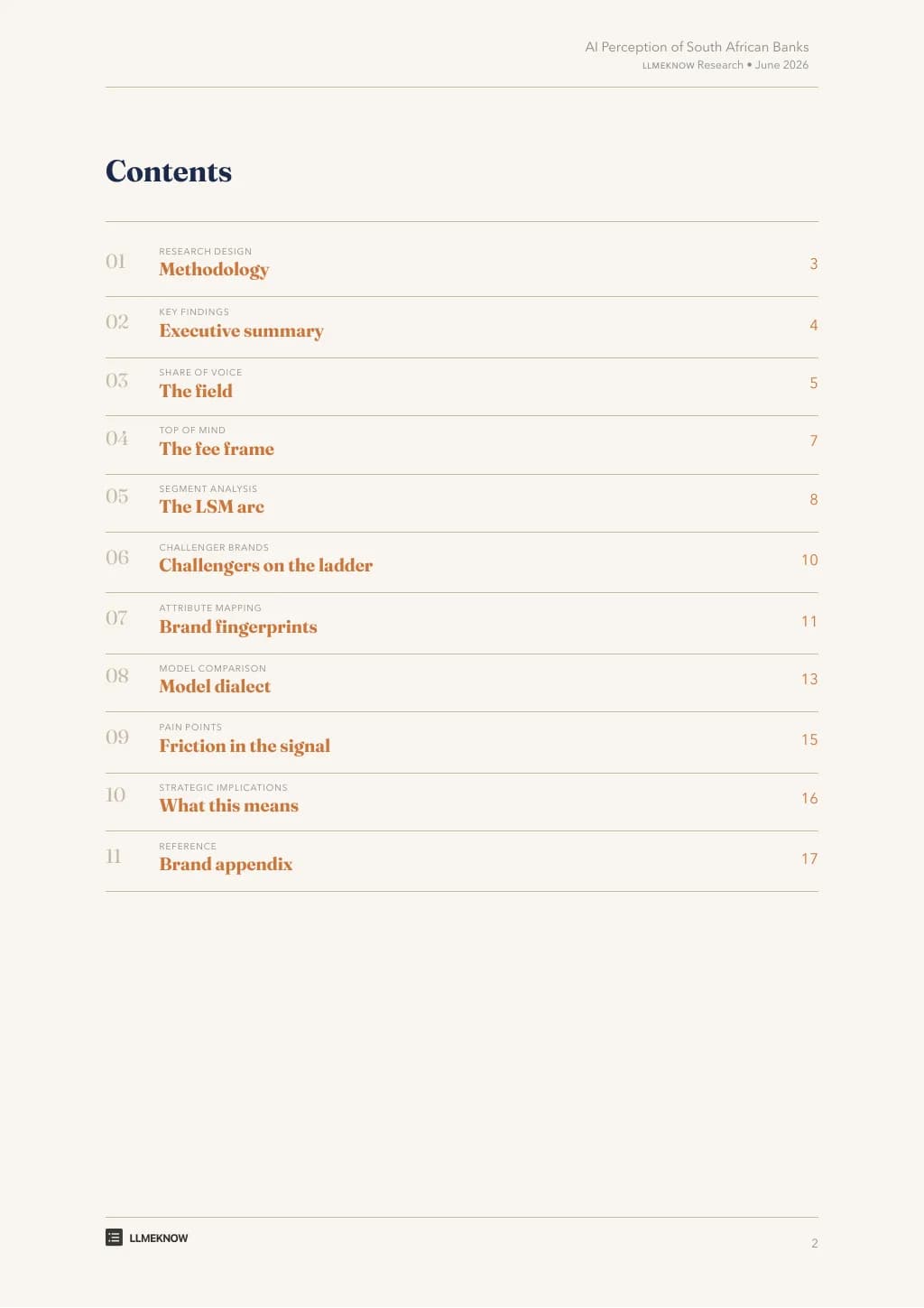
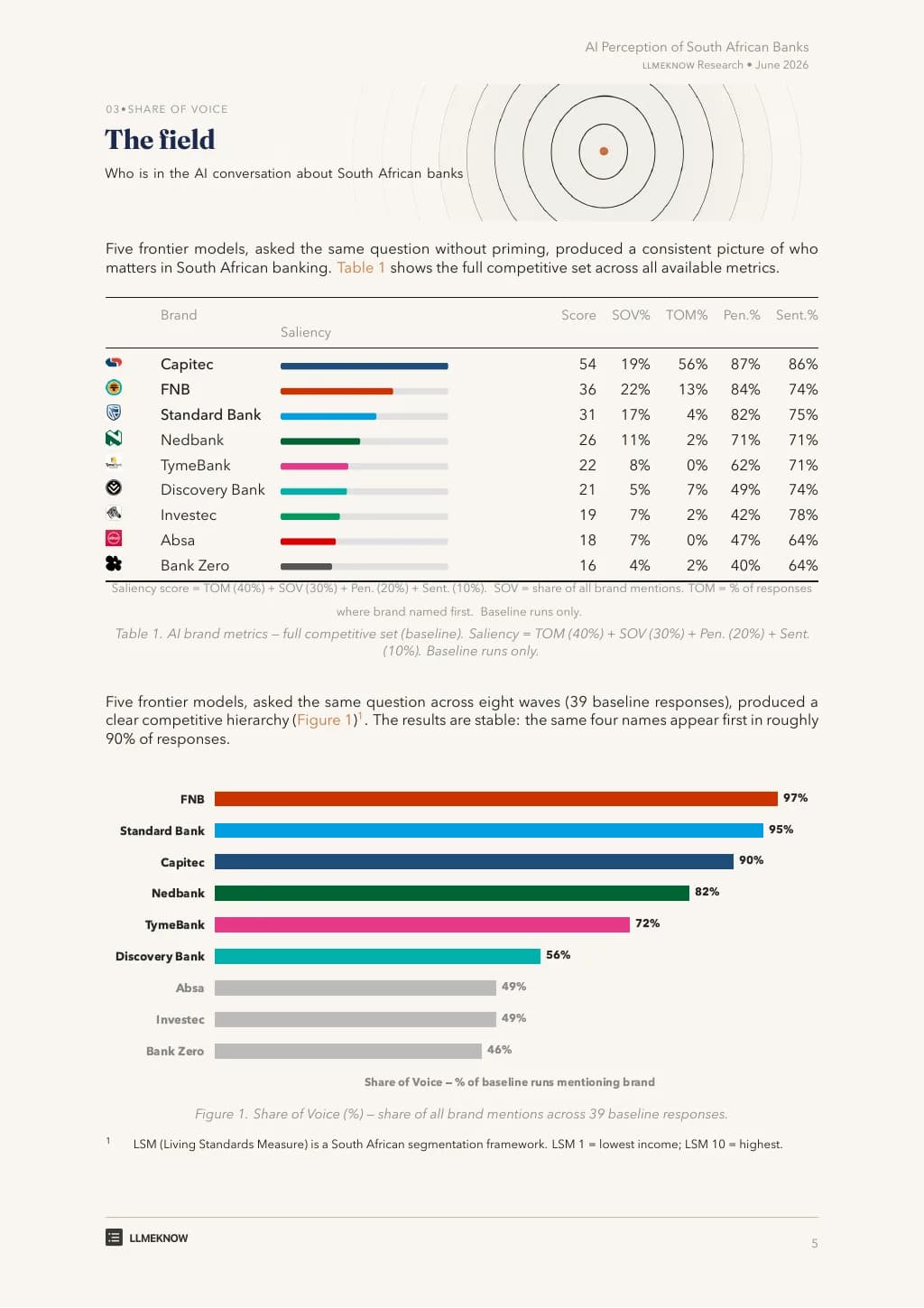
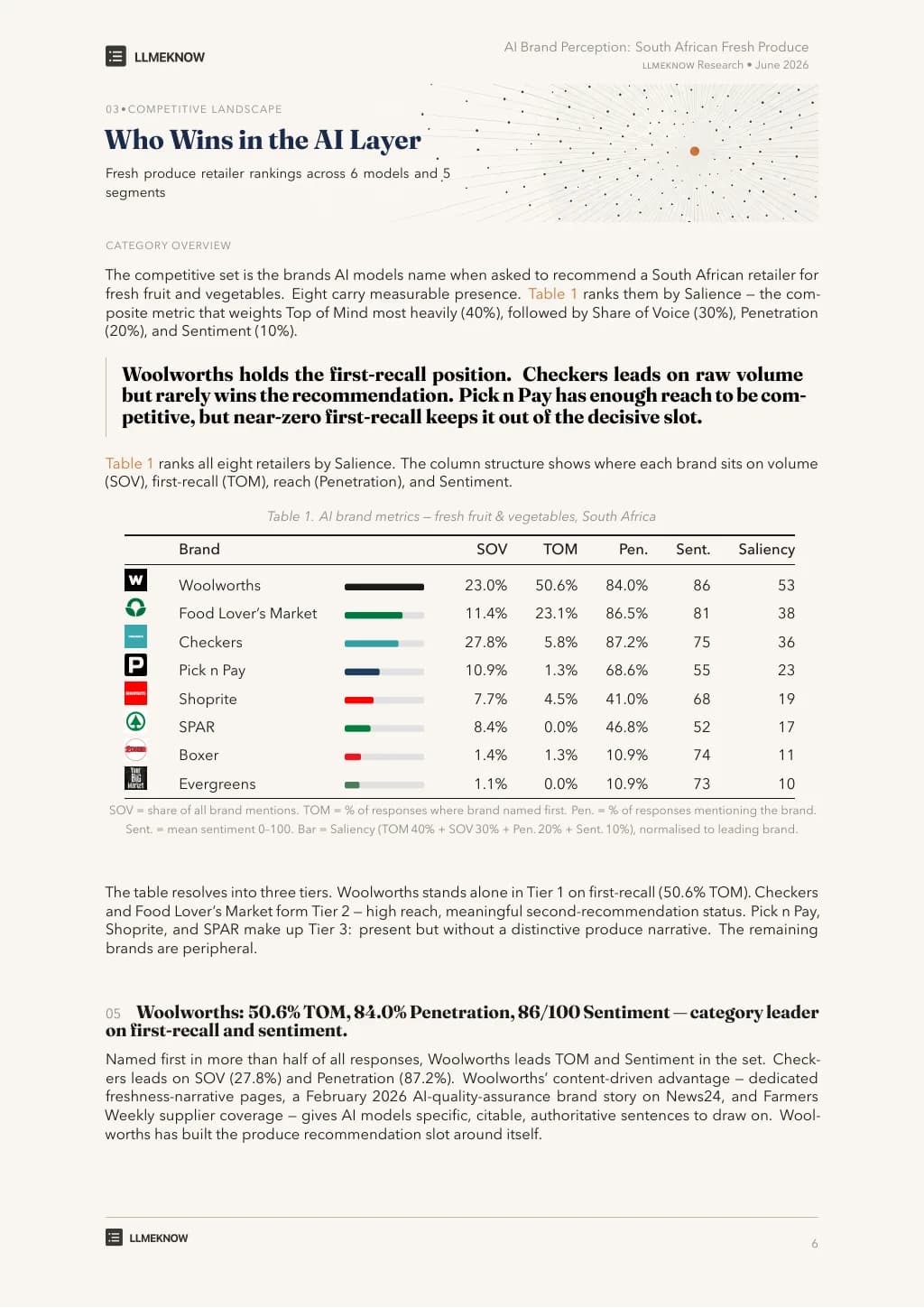
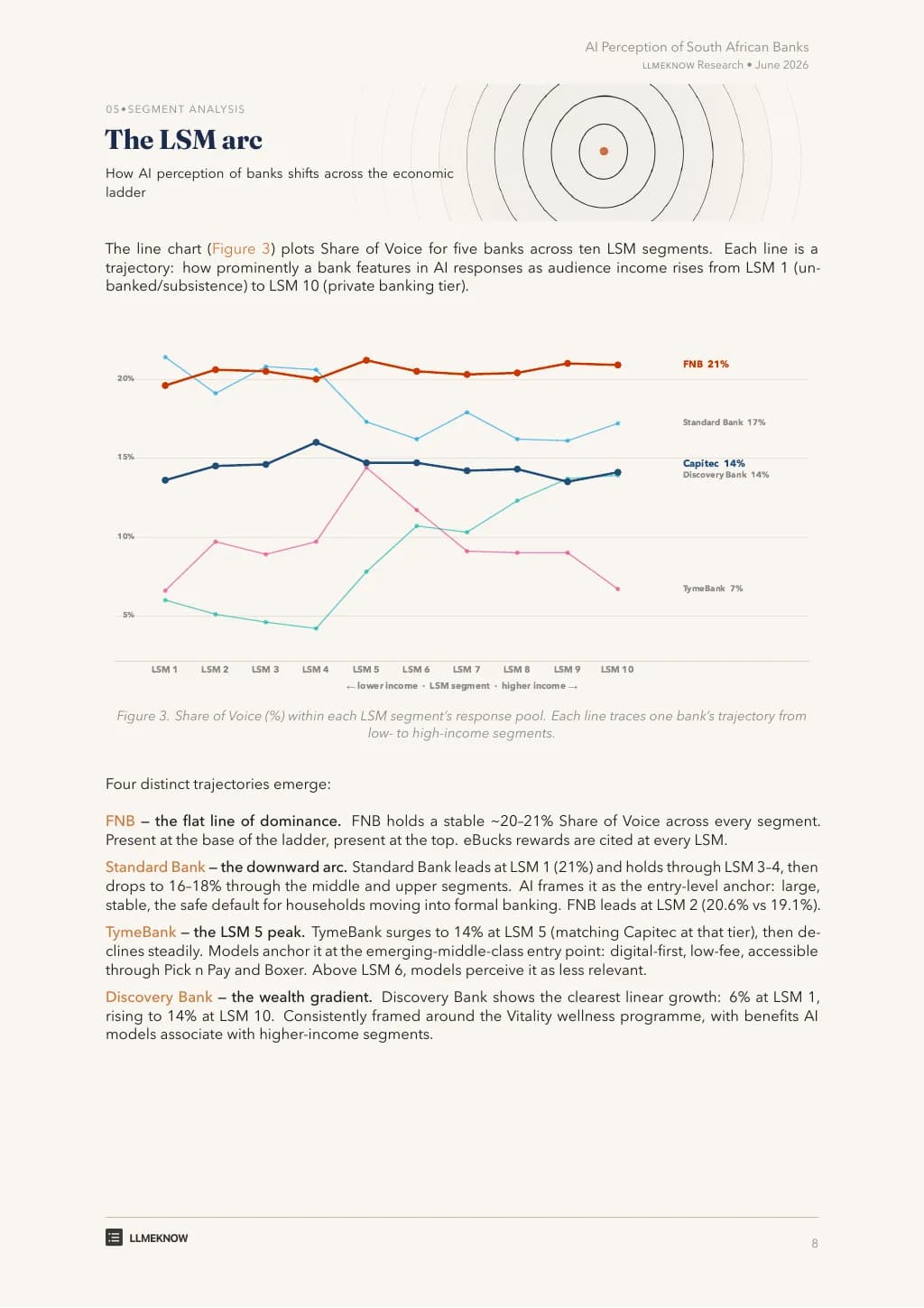
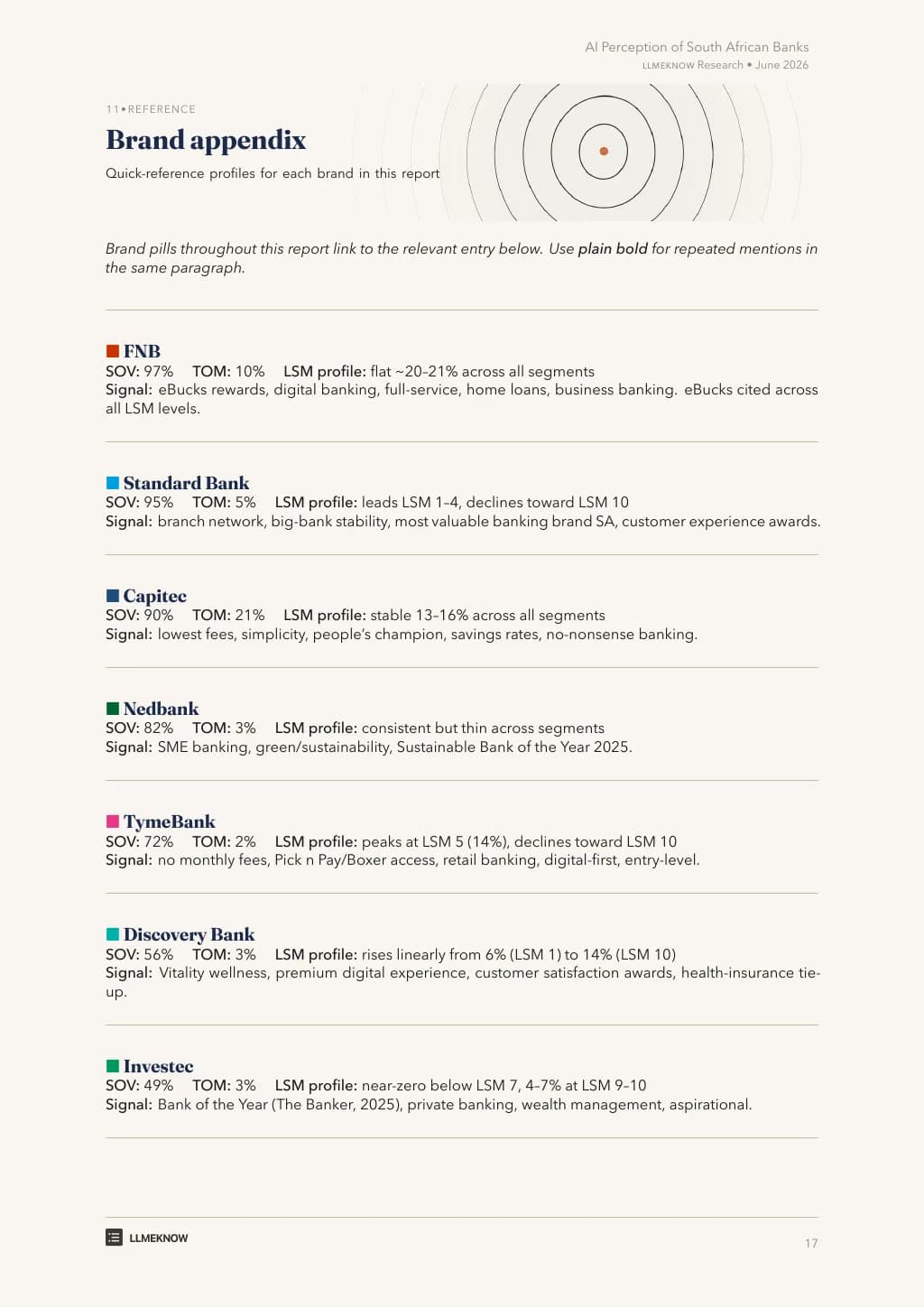
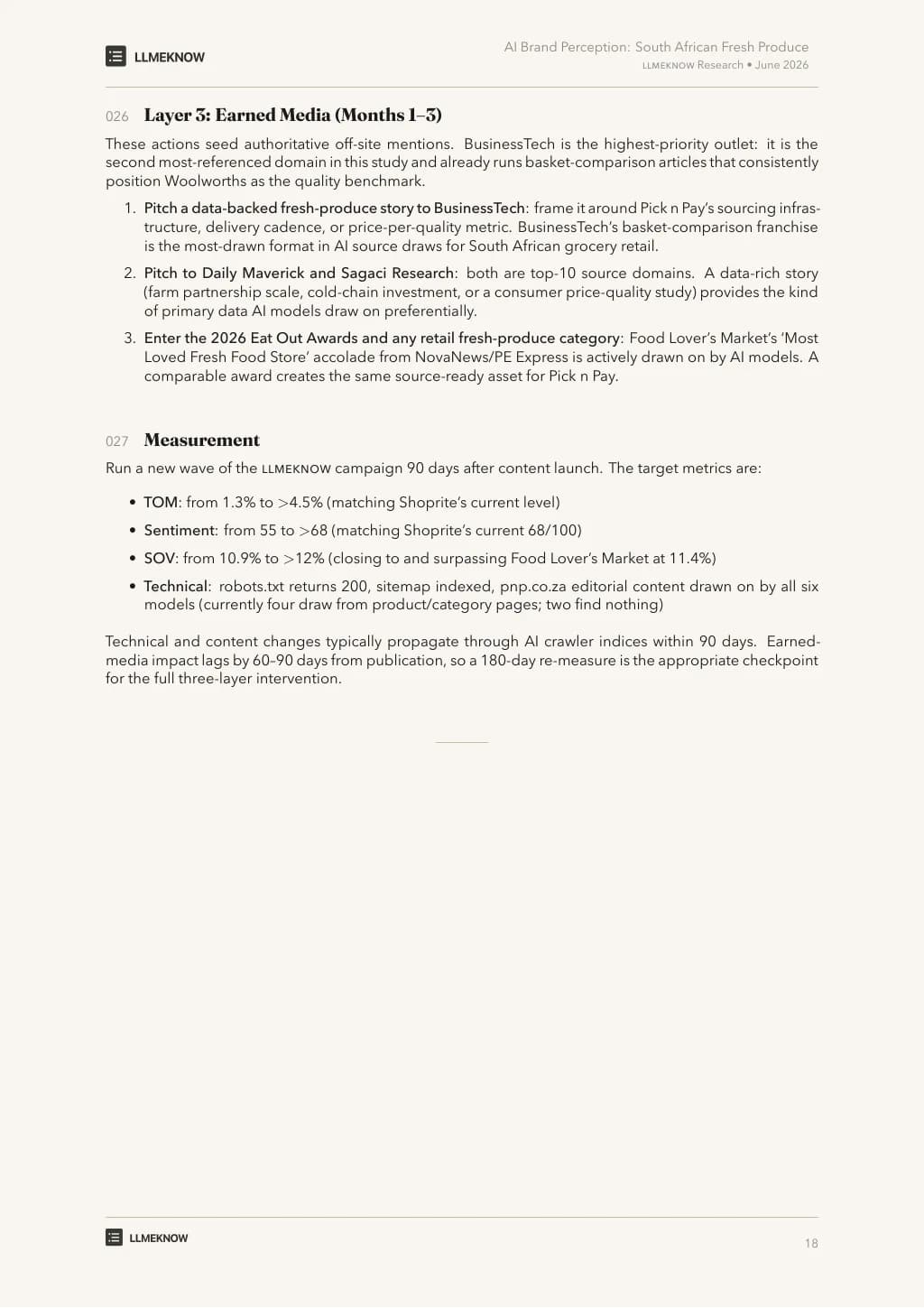
Every research wave can be compiled into a designed intelligence report, ready to present or forward. These pages come from real studies.




The metrics inside
Every chart is built from your study data: no stock visuals, no hand-waving.
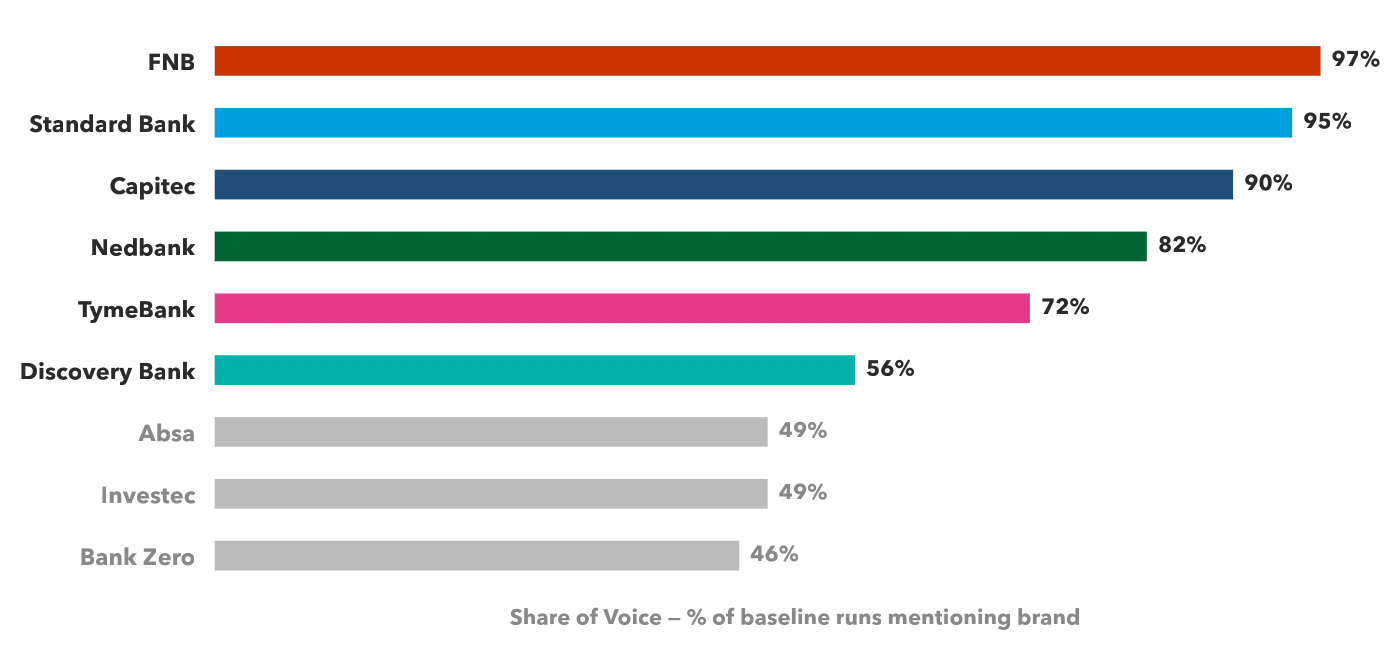
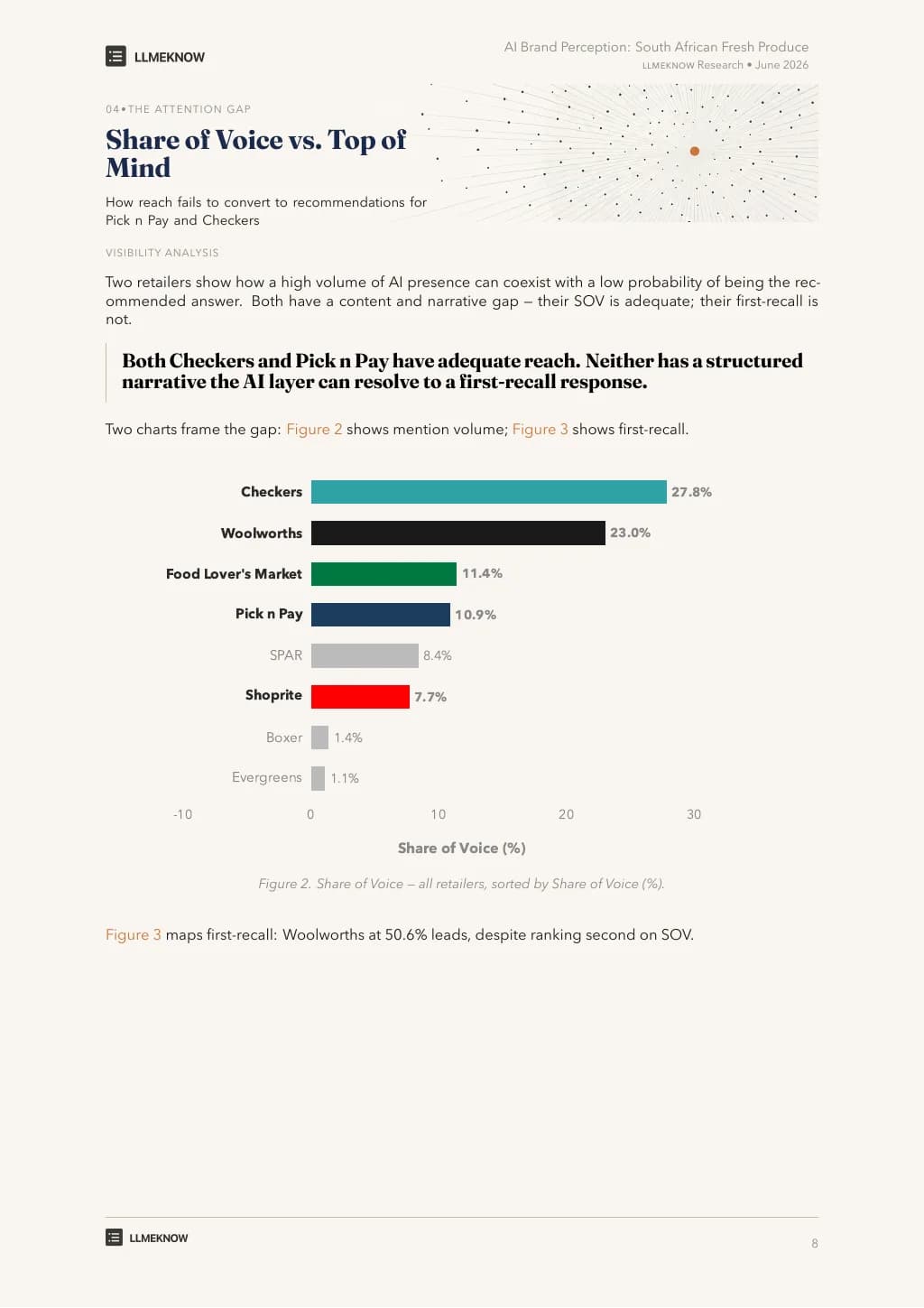
Share of Voice
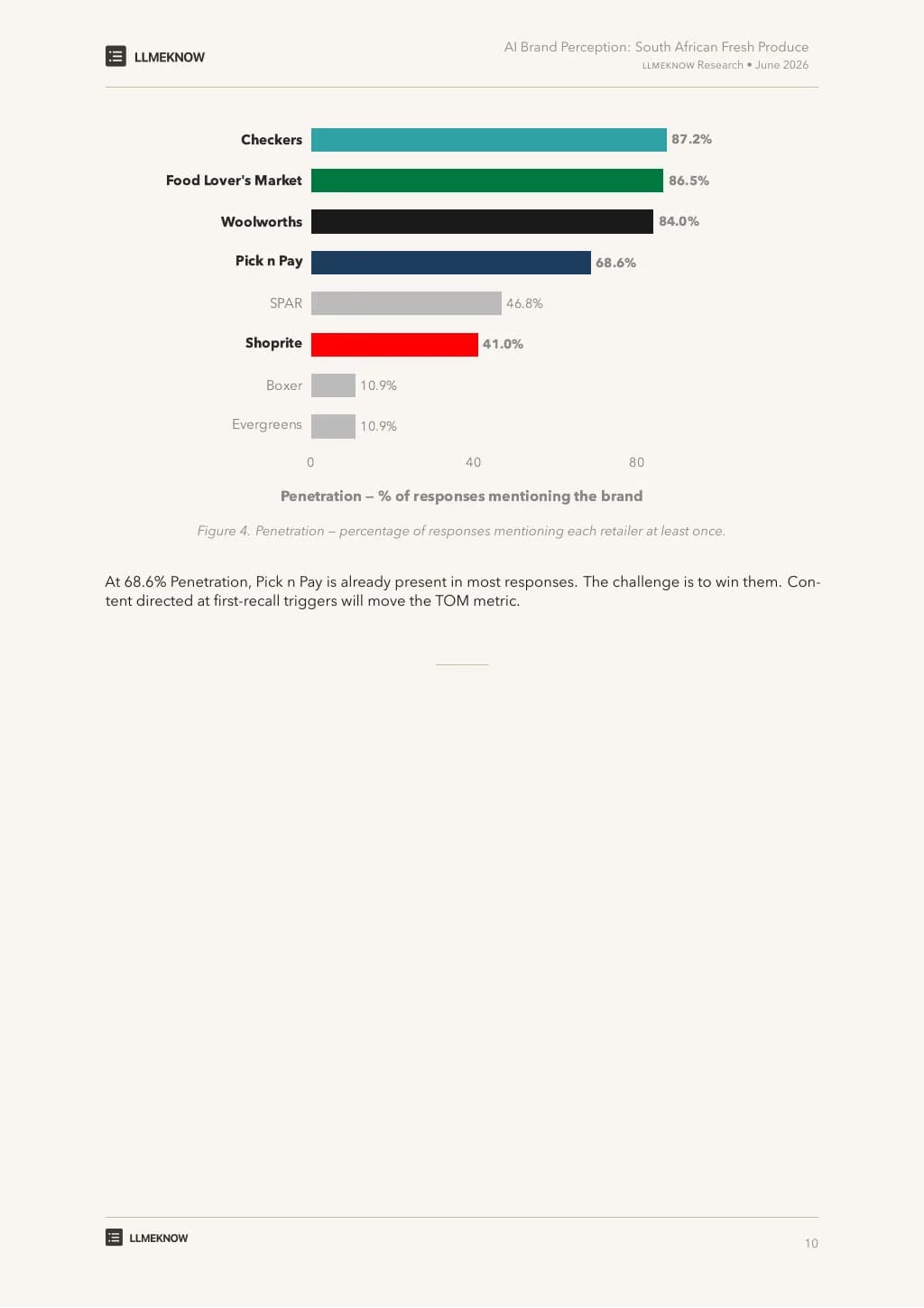
How much of the AI conversation each brand owns when buyers ask open questions.
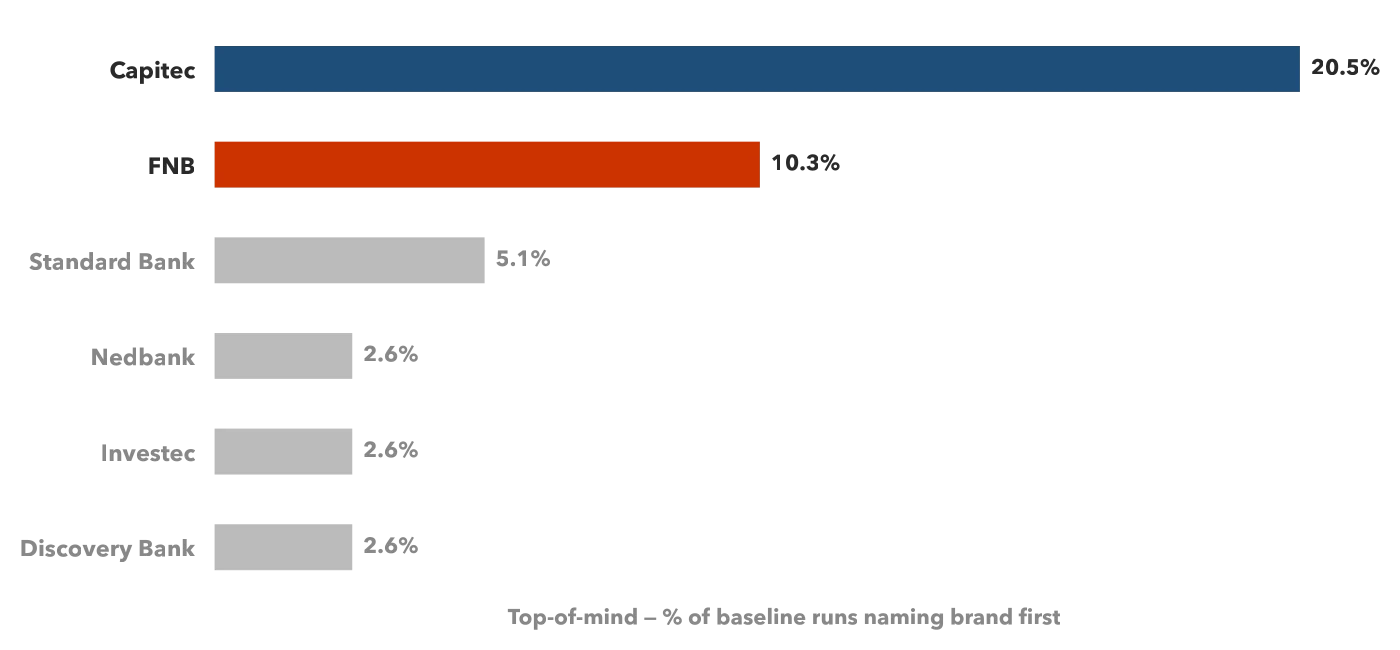
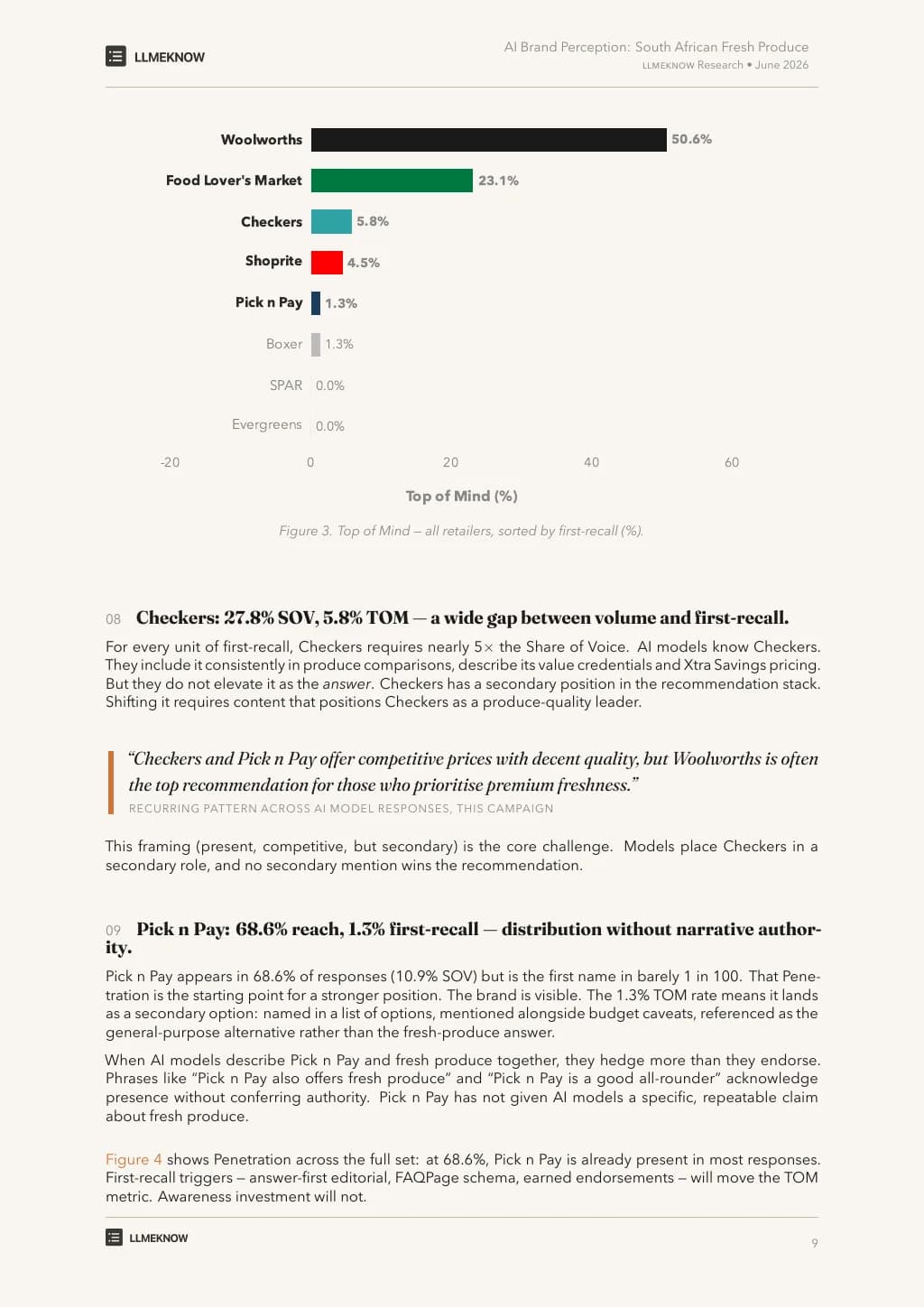
Top-of-Mind Recall
Which brand the AI names first, question after question.
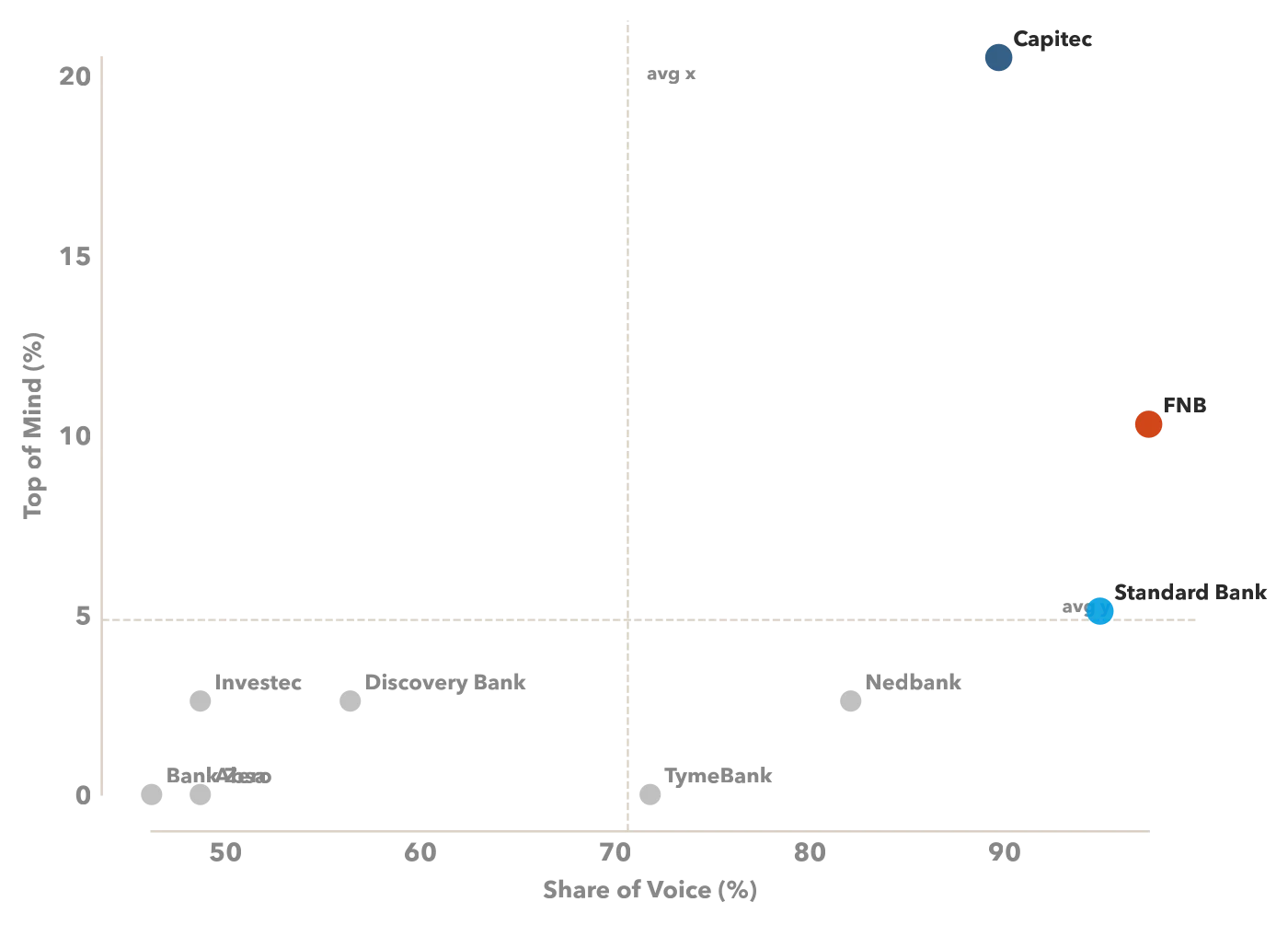
Salience Map
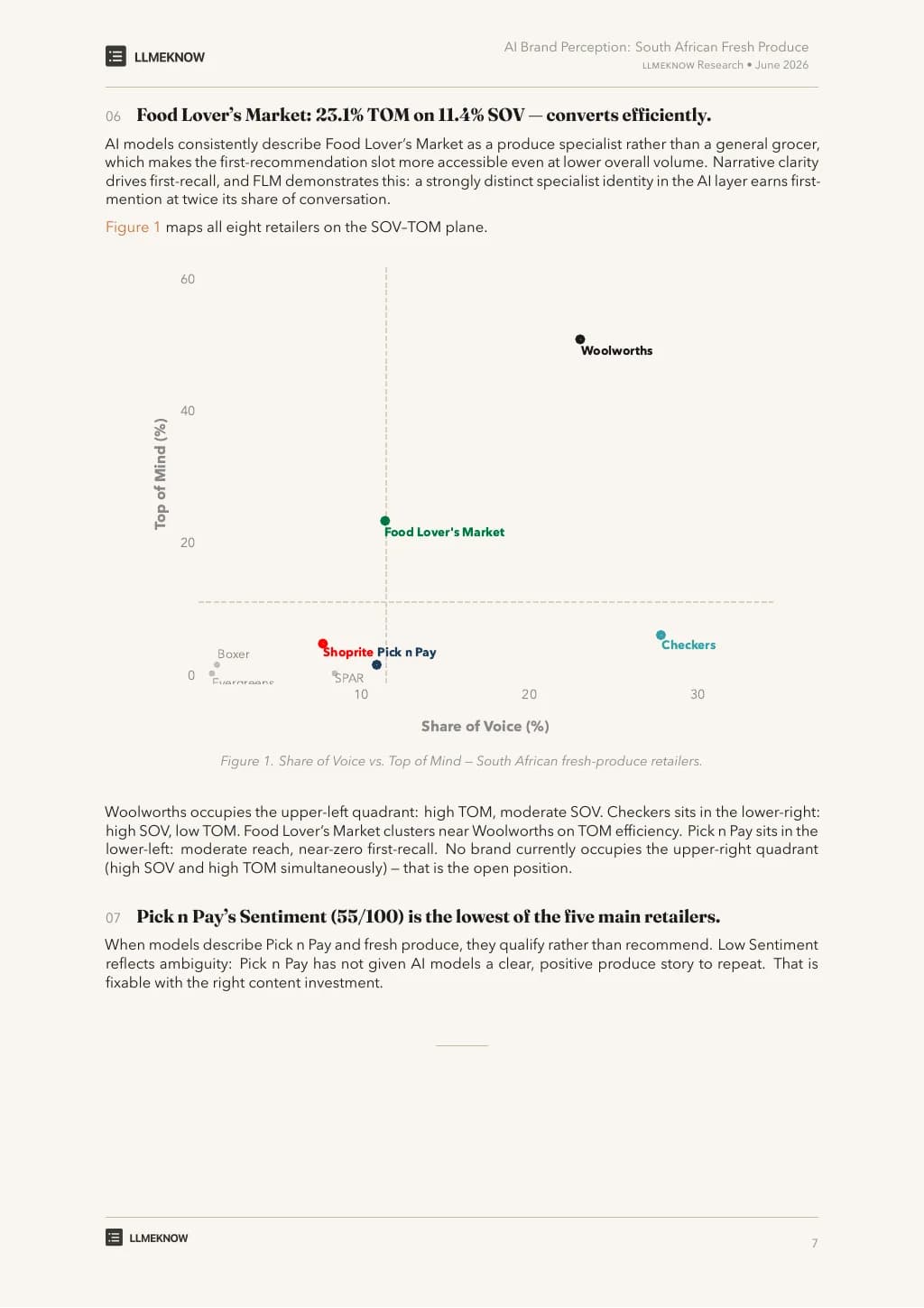
Share of voice against first-mention rate: leaders, challengers, and the invisible.
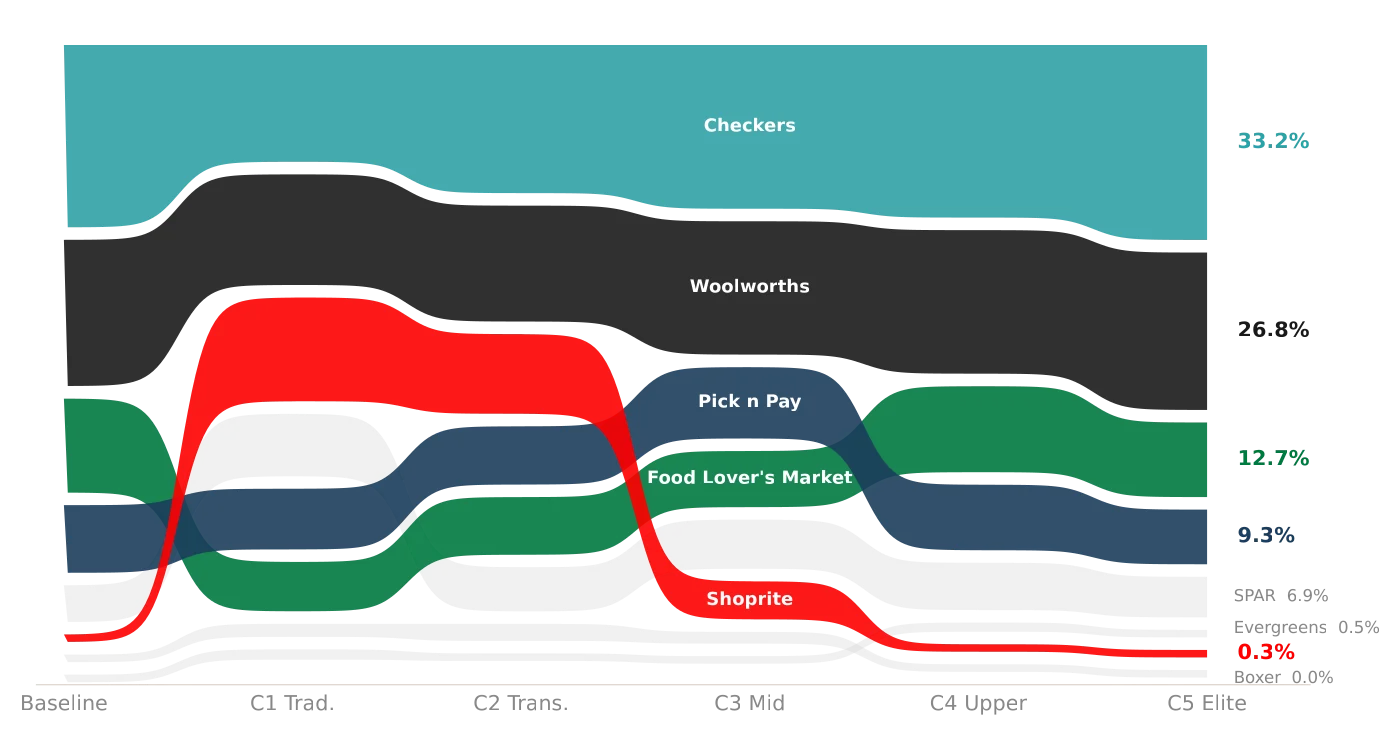
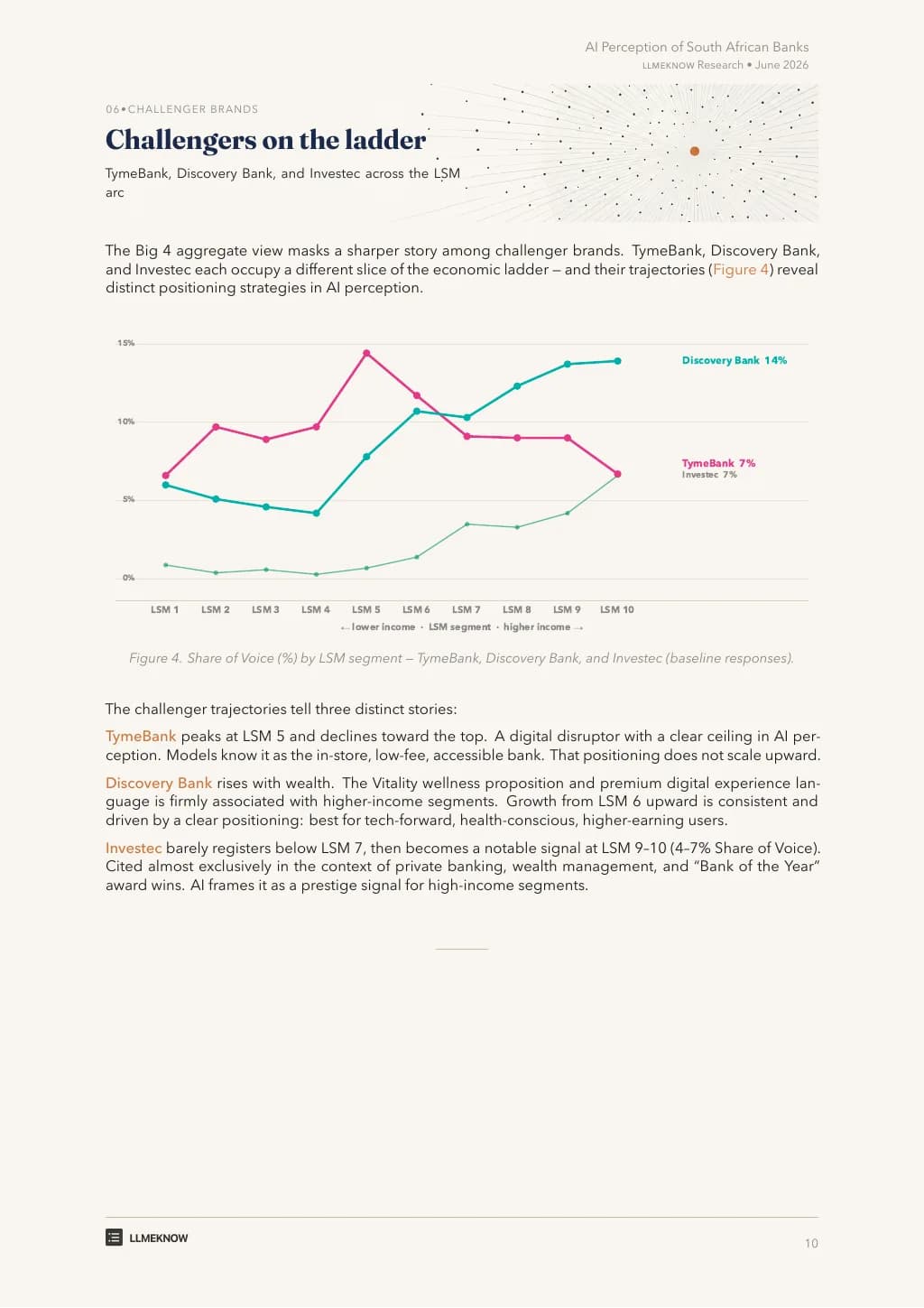
Share by Segment
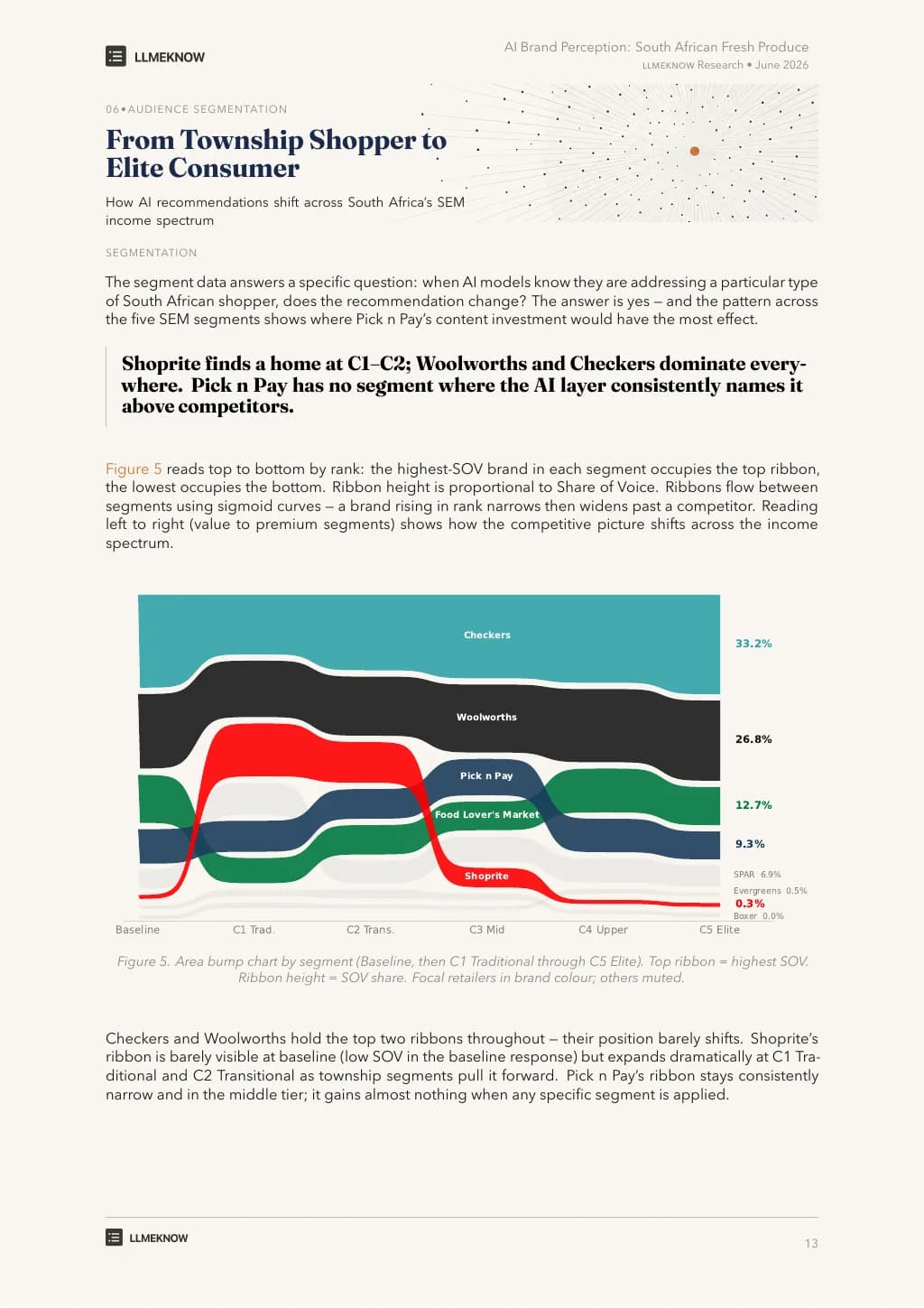
How each brand’s slice of the conversation swells and shrinks across audience segments.
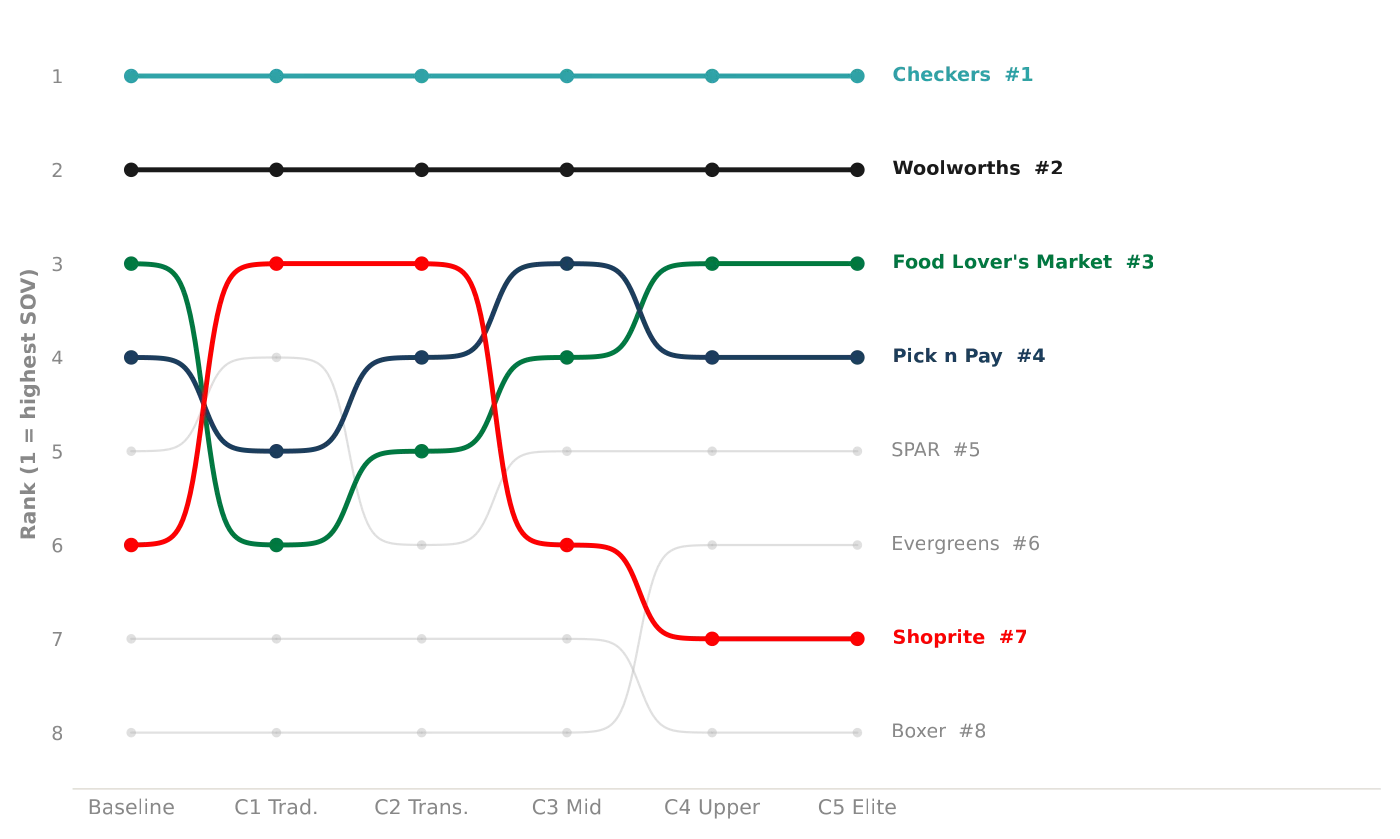
Rank by Segment
How brand rankings reshuffle as the audience shifts from one segment to the next.
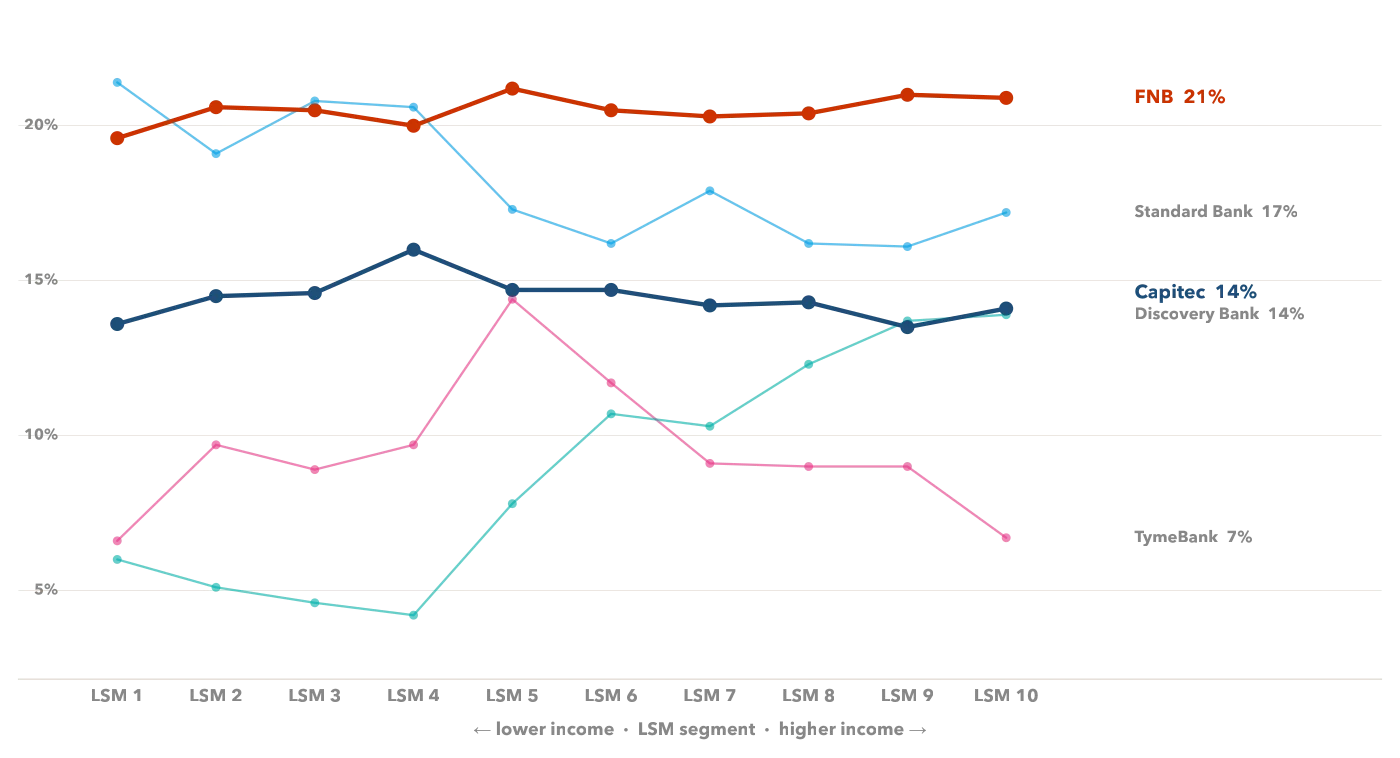
Prominence by Segment
Each brand’s share of voice traced across the full segment spectrum.
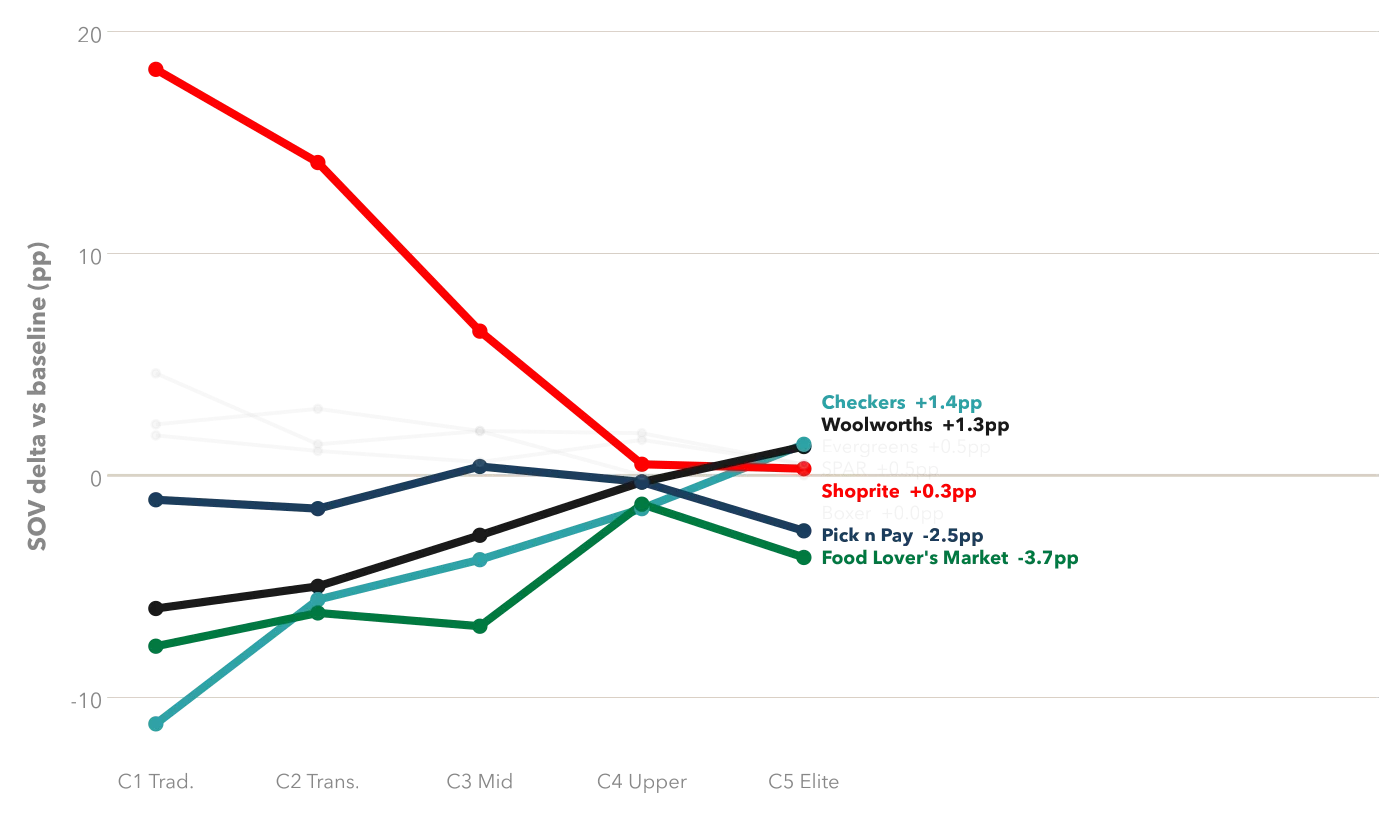
Segment Deltas
Which segments over- and under-index on your brand versus baseline.
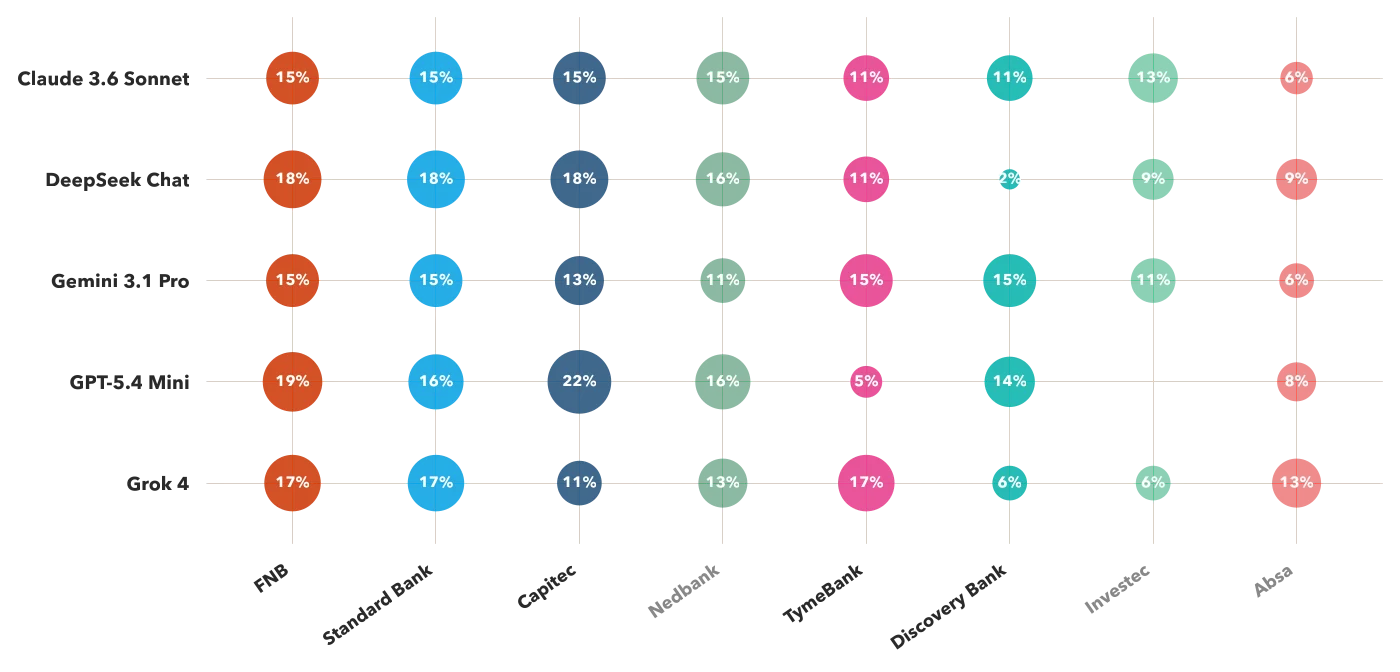
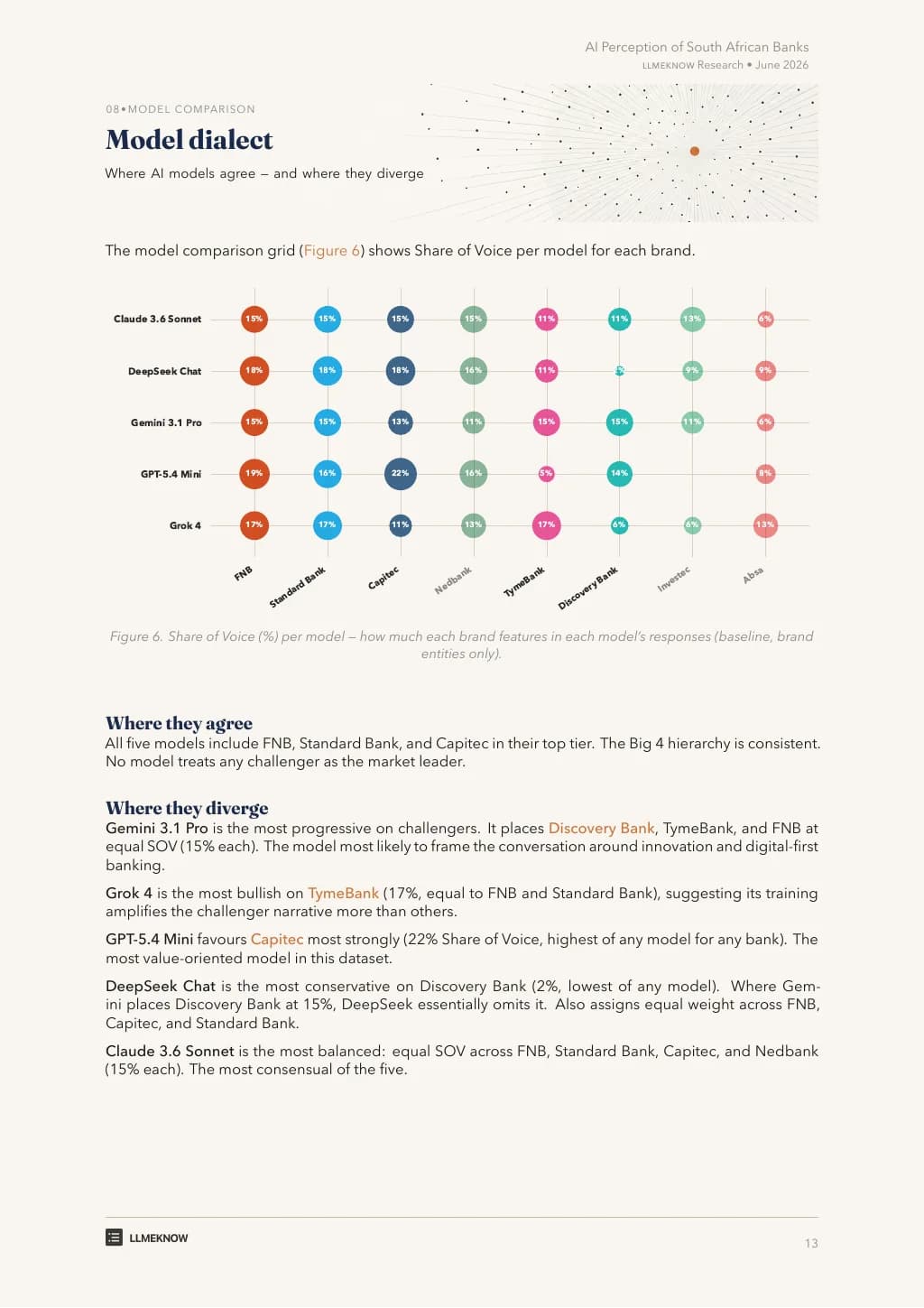
Model Dialect
How each AI model weights the same brands differently.
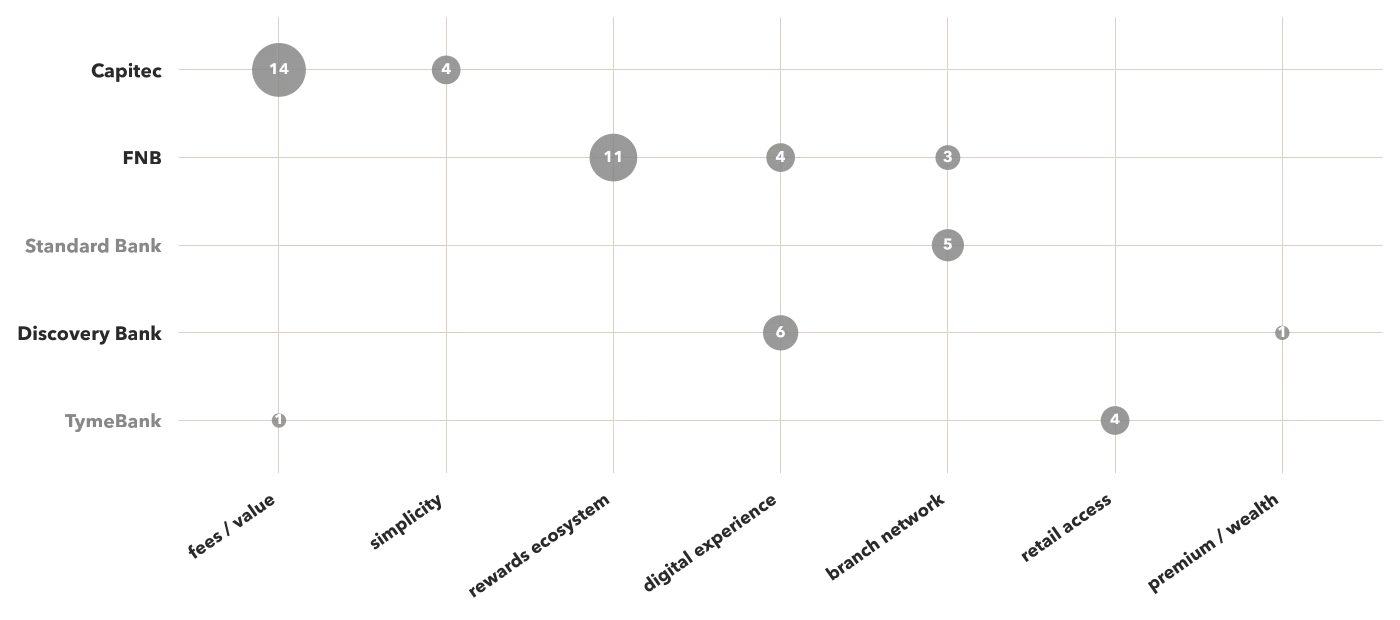
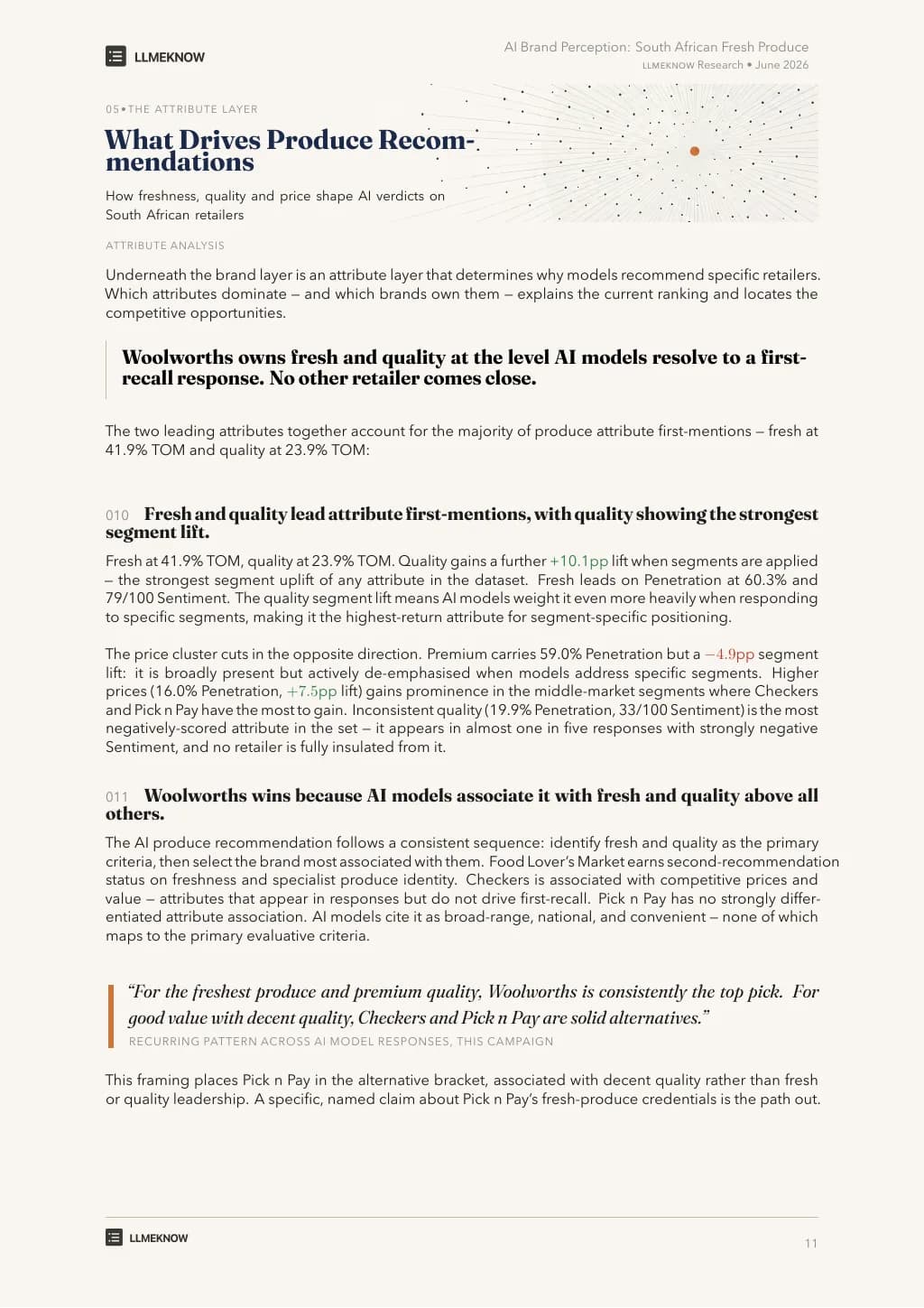
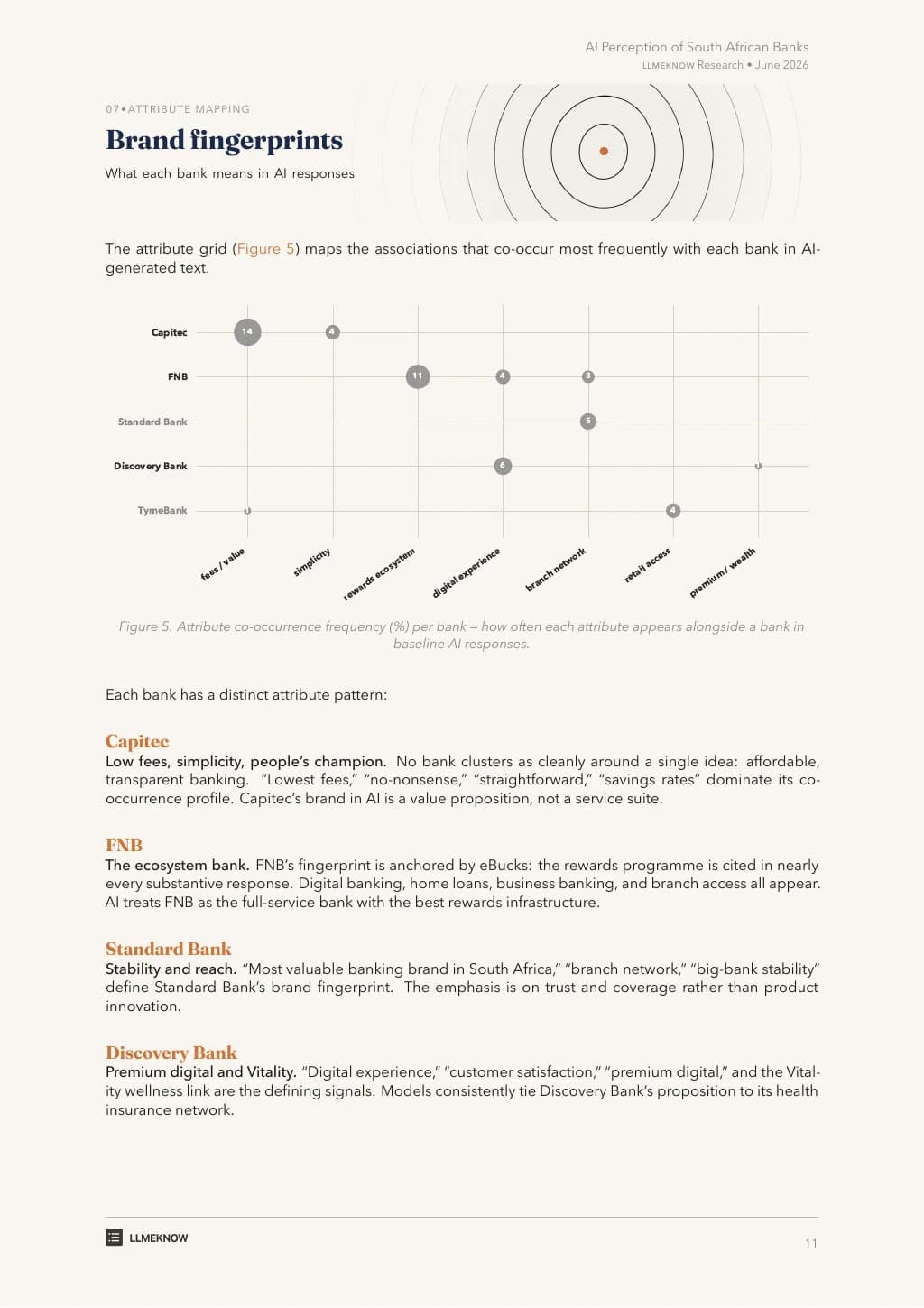
Brand Fingerprint
The attribute profile AI associates with each brand.
Use cases
Any subject. Any audience. Any question people ask AI.
Commercial intelligence
AI recommends some products and not others. Do you know where yours stands?
We simulate the audience segments in your market. For each one, we run your questions through every major AI and record what it recommended. You find out exactly which segments AI recommends your subject to, and which it misses.






Governance and public perception
How does AI describe a city, institution, or policy to people with different views?
AI does not describe public subjects the same way to everyone. What it says about a government, a policy area, or a public figure shifts based on who it thinks is asking. llmeknow makes those shifts visible across any segmentation you define, tracking any entity type you specify.
Reputation and PR
When the story breaks, what does AI tell people about you?
PR teams use llmeknow to track how AI narrates a company, an executive, or a controversy as a news cycle unfolds. The entity engine adapts to the story: track claims, spokespeople, rival narratives, or pain points instead of brands. Wave-over-wave tracking shows whether the narrative is moving, and the cited sources show what is feeding it.
In-market, in-language
Ask in the market’s language. Analyse in yours.
AI answers a question asked in Thai differently from the same question in English, because the sources and habits behind it differ. llmeknow runs questions the way the market would ask them, in the market’s language, then translates responses and analysis into the language you work in.
How it's different
Most tools tell you whether you appeared. We tell you what AI said, and who was asking.
Simulation, not keyword tracking.
Monitoring tools run your brand as a search term and count appearances. llmeknow models your market from the ground up, building the audience segments, the personas within them, and the questions each persona would ask. Every question runs through every major AI in that persona's context, so you see what each model actually says to each type of person, not just whether your name appears.
You define what counts as a mention.
Other tools extract brand names. llmeknow extracts whatever entity types your research requires: brands, product attributes, pain points, services, policy positions, institutional names, or any other category that matters. You define the taxonomy. The platform scans every response for those entities, automatically groups variant names into a single clean entry, and tracks them across all runs.
Your segmentation, not ours.
Have an existing audience segmentation? Upload it. The platform builds the personas around your framework rather than a generic demographic template. For brands and agencies that already know their audiences, this means the simulation is grounded in your own research, not a generic AI inference about who your audience is.
Common questions
30-day access
Explore llmeknow for 30 days with no subscription fee
You pay only for the AI responses you generate: we show the estimated cost and you add funds before anything runs. No card is needed to create your account, and no subscription starts unless you choose one. Prefer a guided walkthrough first? Leave your details and we will be in touch within one business day.
Ready to go? Explore for 30 days →
Already have an account? Sign in →