AI chatbot brand monitoring
Monitor how AI chatbots mention your brand.
llmeknow tracks what ChatGPT, Claude, Gemini, Grok, Perplexity, and other AI systems say when your buyers ask about your category: whether your brand appears, what it is credited with, who appears alongside it, and how all of that changes depending on who is asking.
The problem
Your buyers ask AI, and AI has opinions
A growing share of purchase research now starts in a chat window instead of a search box. When someone asks an AI assistant "which bank should a freelancer use?" or "what is the most reliable bakkie?", the model answers with specific brands, specific reasons, and often specific warnings.
Those answers are invisible to traditional monitoring. Nothing appears in your web analytics, no keyword ranking moves, and no social listening tool picks it up. The conversation happens between your buyer and the model, and you only see the outcome.
Coverage
Every major AI system, queried live
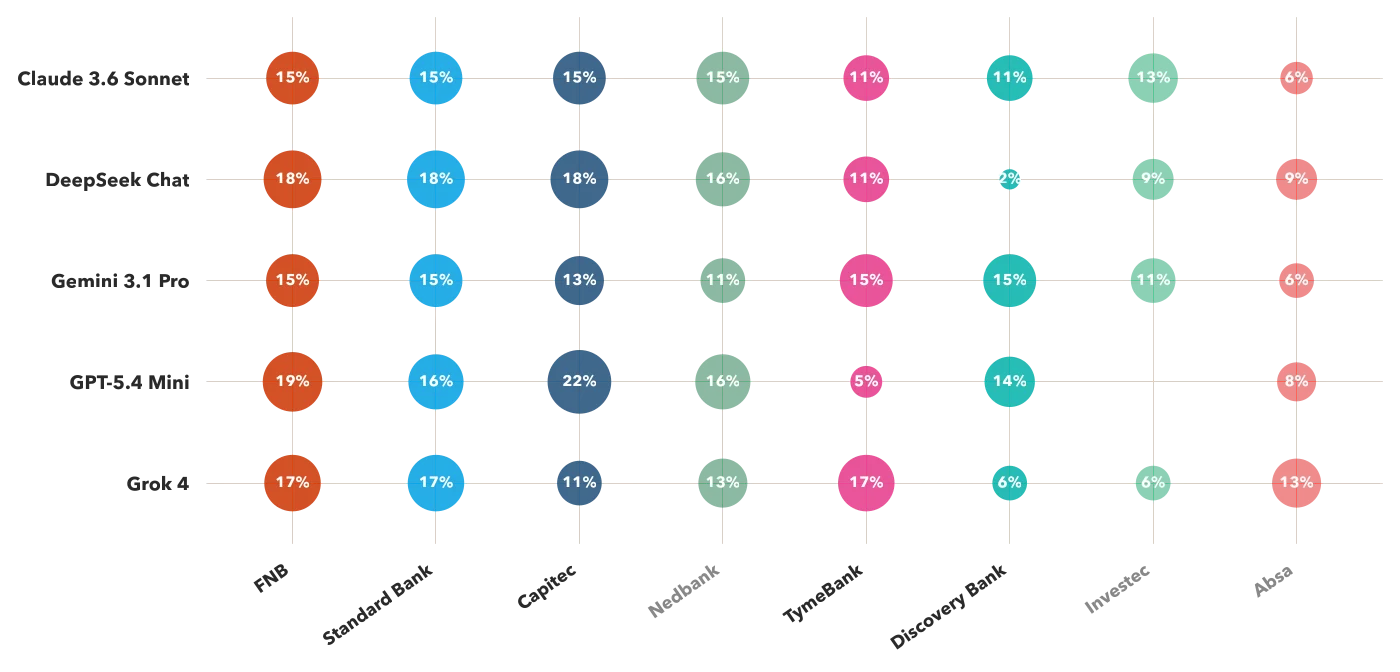
llmeknow runs your research questions through the major AI models: ChatGPT, Claude, Gemini, Grok, Perplexity, DeepSeek, and Kimi, with new models added as they earn market share. Every response comes live from the actual model, with no pre-set answers and no cached snapshots.
Where a model searches the web to answer, llmeknow captures the search queries it ran and the sources it cited. You see what the model said, which websites taught it to say so, and what it searched for along the way.
The difference
Answers change with who is asking
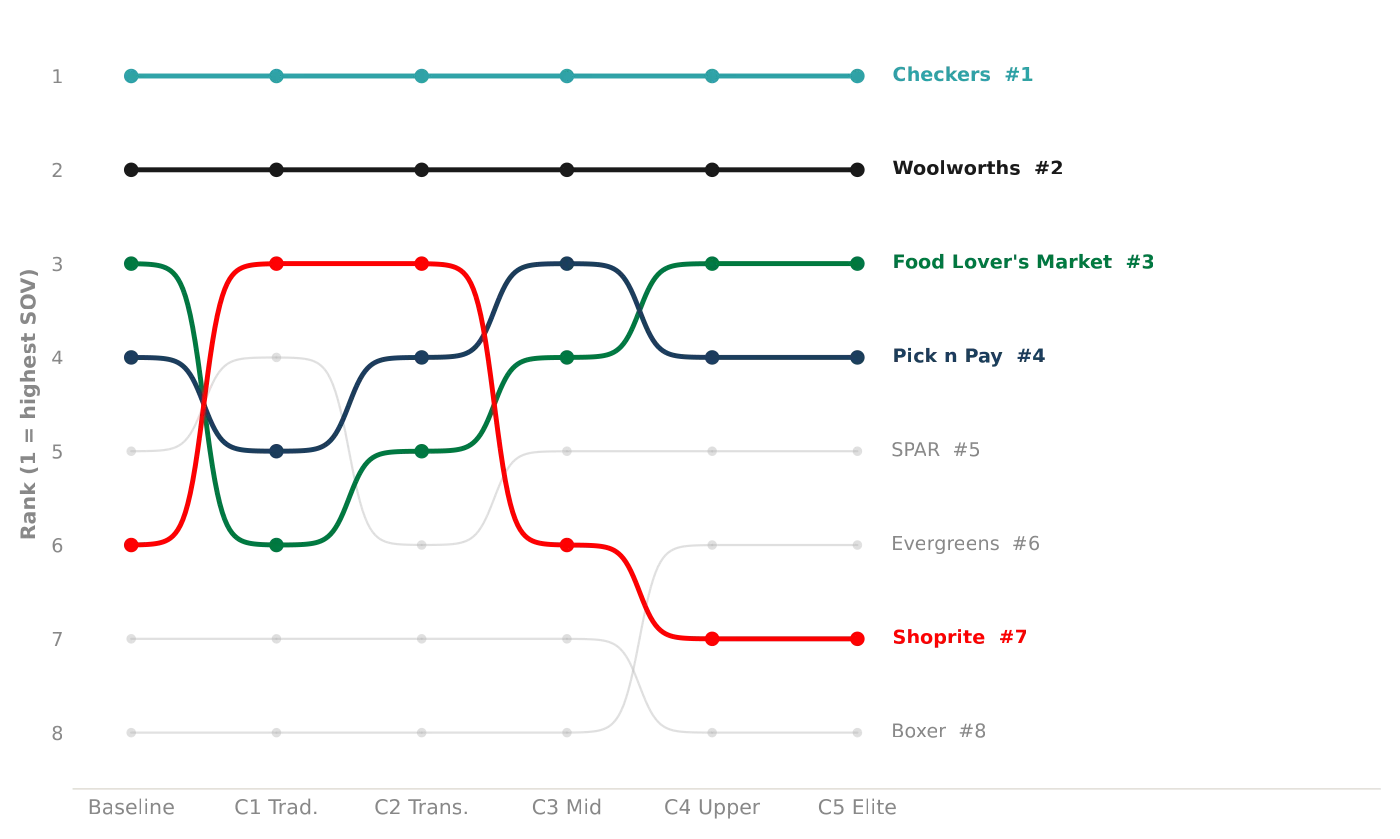
AI models tailor answers to the person asking. A student and a retiree asking the same insurance question get different recommendations. Most monitoring tools ask each question once, from nowhere, and report the average.
llmeknow asks every question in the context of the audience segments you define, alongside a no-segment baseline for reference. You see which segments AI steers toward you, which it steers away, and how the gap between segments moves from one research wave to the next.
The output
The metrics you get
Every response is processed into the metrics a marketing team can act on:
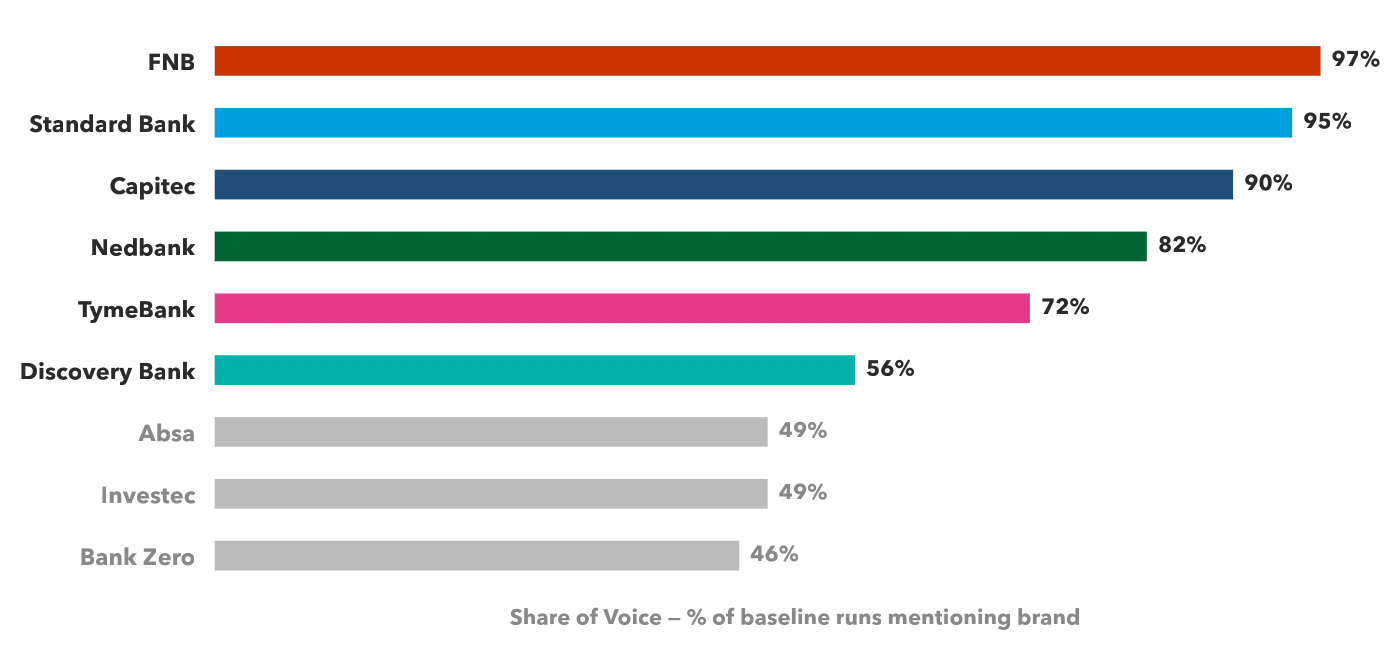
- Share of voice: how often each brand appears in answers, by model and segment.
- Top-of-mind recall: which brand each model names first when the question is open-ended.
- Characterisation: the attributes AI attaches to each brand, and how they differ from your competitors.
- Sources: the websites models cite when they answer, and how often each one appears.
- Wave-over-wave trends: how all of the above moves between research waves, so you can see whether your AI visibility is improving or slipping.
Reporting
From raw responses to a report you can forward
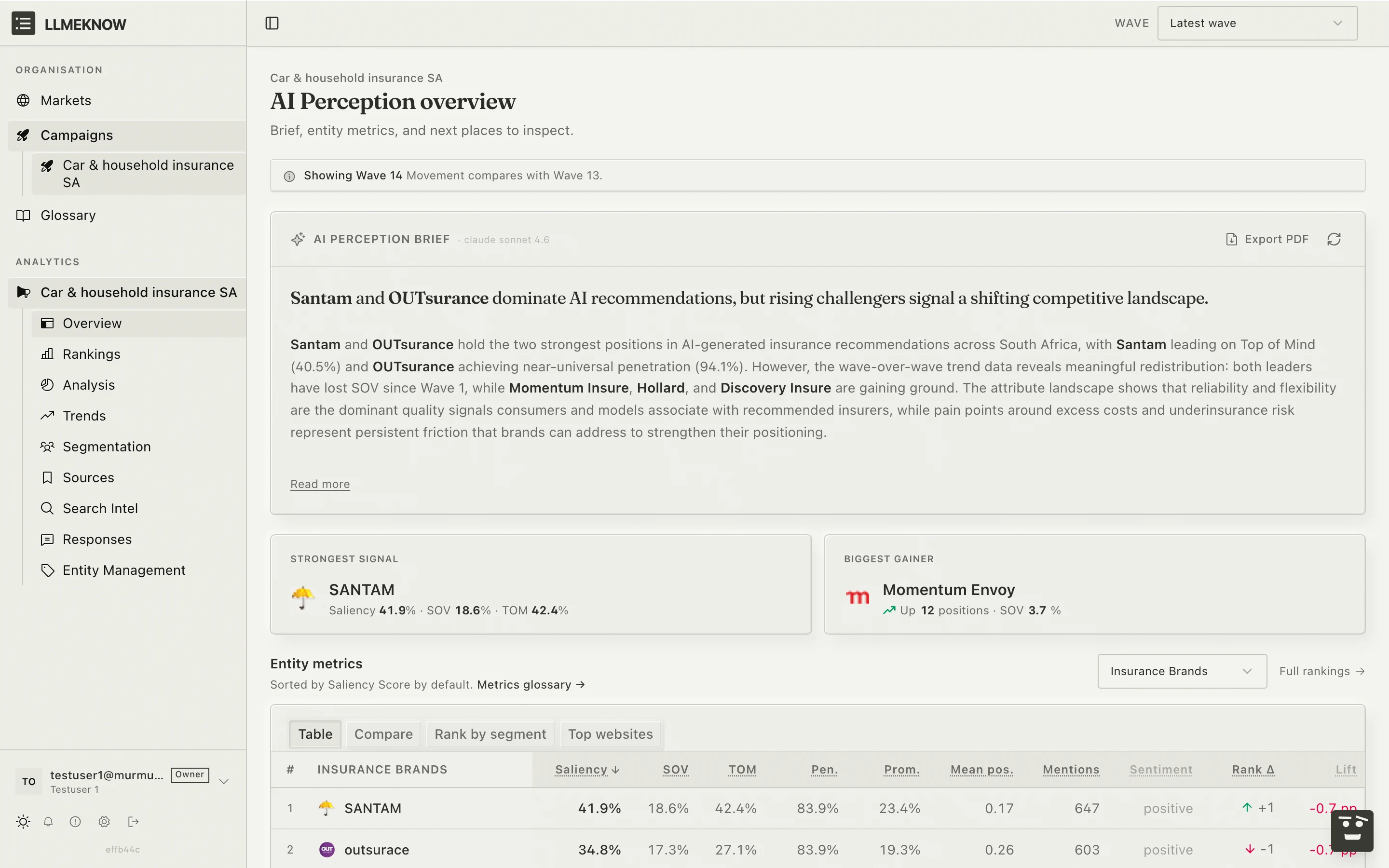
Every AI response is kept and inspectable, with brand mentions highlighted, so "what did it actually say?" always has an answer. Campaign results compile into designed intelligence reports ready to present to a client or a board. And because every answer traces back to the sources that fed it, the report also tells you where better information will change the next one.
Common questions
Related reading
Understanding AI influence
How GEO, AEO, SEO, and LLM monitoring fit together as one discipline.
How to track brand presence in AI search
The step-by-step measurement process, whether you use a tool or not.
AI brand sentiment monitoring
How AI characterises your brand, and how that shifts by model and audience.
Brand name monitoring and entity recognition
How mentions are identified and variant names grouped into clean entities.
Find out what AI tells your buyers.
Explore the platform for 30 days with no subscription fee and no card. You pay only for the AI responses you generate, with the estimated cost shown before anything runs. No subscription starts unless you choose one.